By Stephen D. Bowling
High winds, dry conditions, and late-season garden burns helped touch off a massive outbreak of wildfires throughout Breathitt County in October 1952.
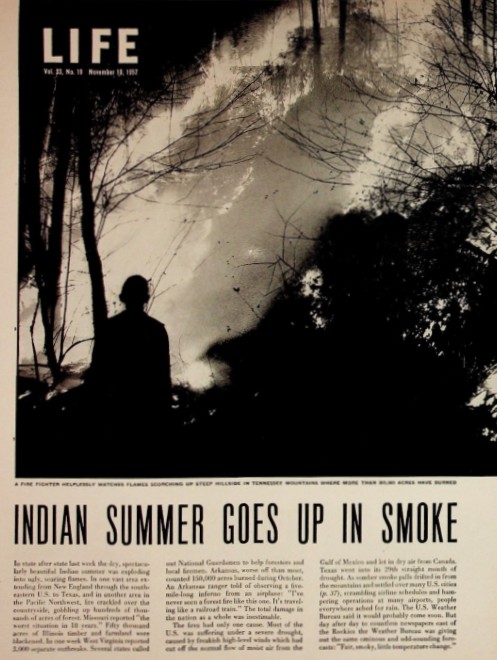
Reports came in of fire on the Flint Davis Farm, near Press on South Fork, on Frozen, Houston, and in every corner of the county, it seemed. Reports from across the state filled newspapers with accounts of massive fires in Clay, Harlan, Letcher, Bell, and Leslie Counties. Fires were reported in the western section of the state and even in the Bluegrass region, where fires were large wildland blazes and were rare.
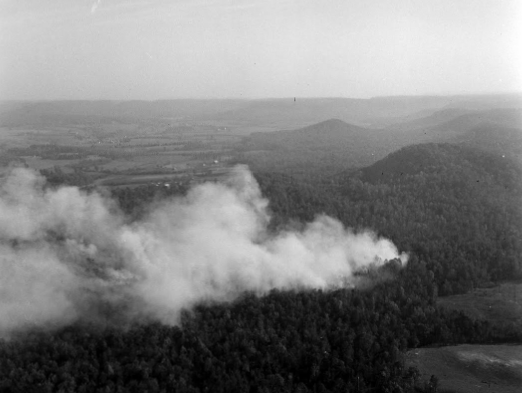
Smoke and ash filled the air and settled on homes and cars as sunlight filtered through the haze, giving everything a dull orange hue. Students traveling back and forth to school complained that choking smoke filled the buses and that officials would not allow them to open the bus windows.
High temperatures exacerbated the situation, and no rain fell. The weather did not relent through the last two weeks of October 1952.
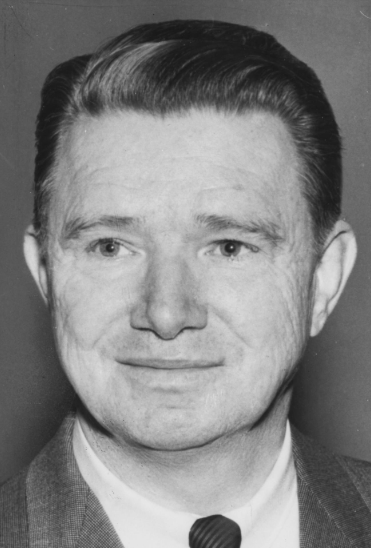
Kentucky Conservation Commissioner Henry Ward announced that 77,490 acres of forest land had been destroyed by more than 200 reported fires burning across the state. Winds from 12 to 30 miles per hour were forecast for the last week of the month. Governor Lawrence Wetherby closed all state land and state parks to camping and picnicking to help reduce the chance of additional fires. Commissioner Earl Wallace of the Kentucky Department of Wildlife closed squirrel season a week early to keep hunters out of the dry woods.
As of October 29, eighteen fires had consumed more than 2,000 acres in Breathitt County.
In Breathitt County, community leaders developed a plan to help combat the worst of the flames. By far, the largest fire in the county was burning on Frozen Creek, along Stone Fork.

Breathitt County School Superintendent Marie R. Turner visited Breathitt High School and offered a suggestion to Principal Wendell Boxley. Turner suggested that the boys of Breathitt High School voluntarily offer their labor to help slow the fire.
Boxley called the boys at Breathitt High School into the gym and laid out the plan.
On Wednesday, October 29, every male student who wanted to spend the day in the woods and volunteer was to come to school with a signed permission slip from their parent or guardian authorizing them to participate in a field day. Each boy was to bring their own hoe or rake. Buses would haul the newly designated firefighters to the fire on Frozen Creek, where they would learn about nature and the science of fire by helping forest wardens fight the consuming flames.
Hundreds of boys left the meeting excited with permission slips in hand. The next morning, 125 returned with their work clothes, tools, and signed permission slips to form what many called the Breathitt High School Fire Department.

Three buses full of students started up and over Frozen Hill to fight the flames.
With several chaperones, including Principal Boxley, James R. Deaton, and Floyd Stacy, the fire brigade dismounted, was divided into several groups, and set to work.
Over the next several hours, as the smoke swirled and the sun beat down, the firefighters from Breathitt High School scratched out several miles of fire break to stop the raging flames on Frozen Creek. One state official estimated that the students raked a ring around the flames that was “at least five miles long.”
The firefighting students also helped officials backfire at several locations after completing the burn’s containment to deplete any fuel that might contribute to a rekindle.
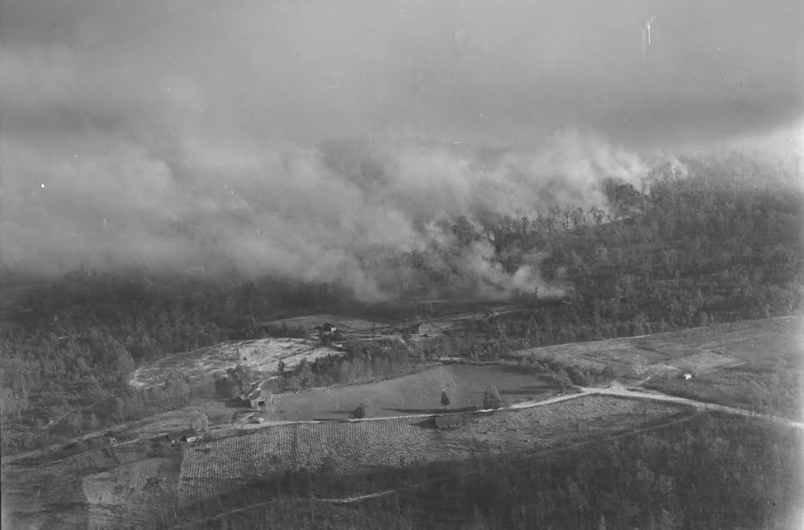
Firefighters who had worked for two weeks at fires throughout the area took some time to rest, eat a good meal, and refresh themselves while the boys filled their spots on the line.
Boxley told The Jackson Times, upon their return that afternoon, that the boys had done an excellent job and were “very effective.”
Mize Roberts, Breathitt County’s Forest Guard, told officials that the boys’ work saved numerous tobacco barns and other structures and that the young firefighters’ efforts were “most satisfactory and effective.”
The young heroes of Stone Fork returned to Breathitt High School triumphant and in a great mood. They loaded the buses and headed home after a great day in the woods with no more damage than some smoke-filled clothes and some briar-scratched knees.
There is no other recorded activation of the Breathitt High School Fire Department, and the meritorious service rendered by the 125-man fire brigade in October 1952 stands alone as an important example of innovative thinking that would never happen today due to lawsuits and insurance concerns.
Thousands of other field trips would take Breathitt High School students around the world, but there is only one known trip by the brave boys of Breathitt with their hoes and rakes.
© 2026 Stephen D. Bowling
Some images were enhanced using artificial intelligence.


