By Stephen D. Bowling
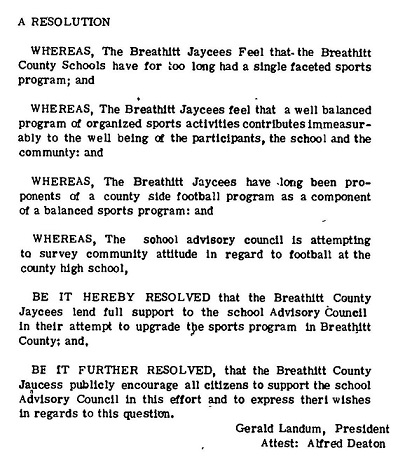
This is the second installment of a series of articles that follow the development and success of the football team at Breathitt High School.
In October and November 1970, efforts to convince the Breathitt County Board of Education to create and fund a football team looked doomed. Members of the School Advisory Committee (SAC) walked away from a meeting with Superintendent Eugene Sebastian disappointed and dejected. Several members of the group talked of “just abandoning football for now and trying again later.” Several SAC members would not give up that easily.

Sebastian continued to state his fears that football was too dangerous. He echoed the opposition and continued the policy against the sport put in place by his predecessor, Marie R. Turner. When high school football started to rise in popularity in the 1950s and 1960s, Superintendent Turner let the community know that she did not like the sport because it was too dangerous. She said that she did not think Breathitt County Schools needed a team. Mr. Sebastian continued that policy long after Mrs. Turner resigned on June 23, 1969.
Things were slightly different now. Since she left office, Mrs. Turner’s views had changed primarily after discussions with Jerry Howell. Howell and James Hay, who operated WEKG Radio, courted Mrs. Turner heavily to change her fears about football. She attended games at the University of Kentucky and at Morehead State. According to one source, nothing “moved on football until Marie R. came around.” A board employee said later that a private phone call from Mrs. Turner to Superintendent Sebastian in 1971 finally opened the door for the drive for football to begin.
Superintendent Sebastian’s concerns about safety were only part of his opposition. He believed that Breathitt High School was, in modern terms, “a basketball school” and would not have enough interest from students who wanted to play or the community. The Football Sub-Committee of the SAC set out to gather information to prove Mr. Sebastian’s theories wrong.
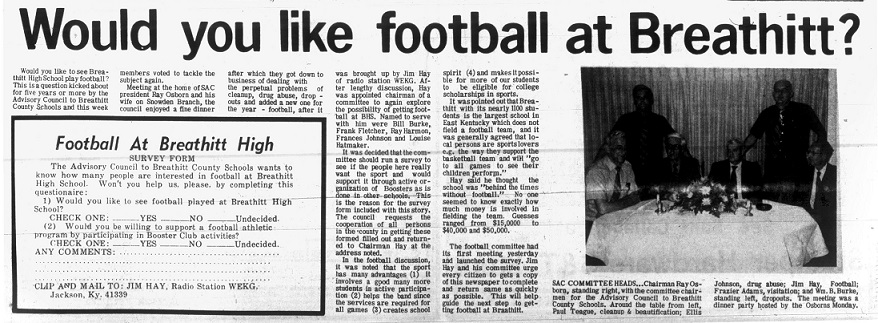
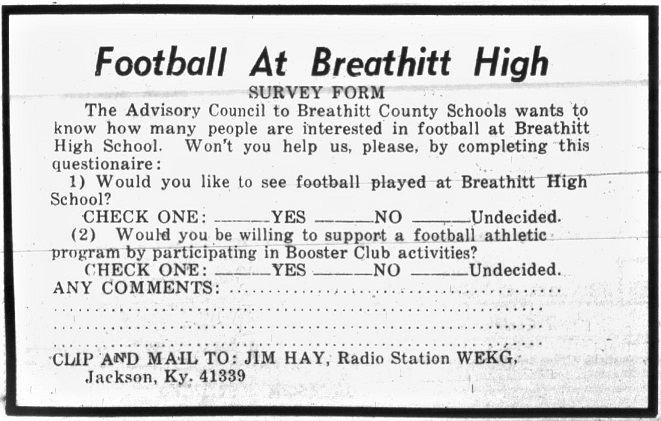
On September 30, 1971, football supporter Louise Hatmaker, Editor of The Jackson Times, posed the question of supporting football to the paper’s readers. In large black type, Hatmaker ran the headline “Would you like football at Breathitt?” across all eight columns at the bottom of the front page. She included a version of the survey developed by the Football Committee to gauge community support.
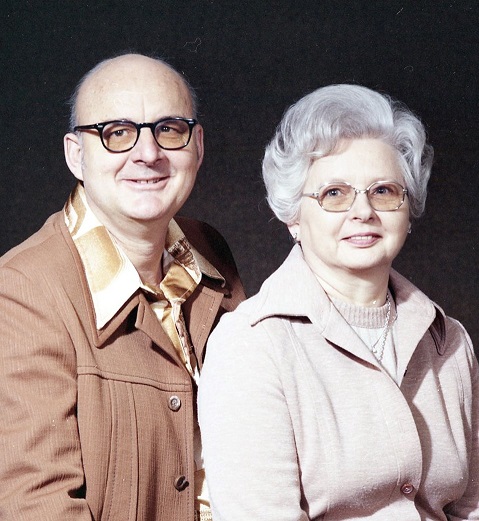
The public survey came after a long meeting at the Snowden Branch home of Ray Osborne, President of the Breathitt County School Advisory Council. After a “fine dinner” served by Mrs. Osborne, the Council got down to business. They discussed various topics, including county-wide cleanups, drug abuse problems, and the rising drop-out rate. Then they turned to the burning topic of the day- a football team.
Jim Hay, part-owner and operator of the WEKG radio station, brought the question before the full School Advisory Council. He noted that there had been discussions for five years and no action. Hay told the member of the SAC that Breathitt High School, with its 1,100 students, was the largest school in eastern Kentucky without a football team. “We are behind the times without football,” he told the Council. Hay proposed that the Board create a committee to formally explore starting a team and seek funding. A lengthy discussion ensued.
The Council discussed the positive effects of football, including the opportunity for many more students to participate in sports, football games could allow the band to be more active and provide another opportunity to play, football helped create greater school spirit and support, and most importantly, the Council believed football would increase the opportunities for students to earn college scholarships. The School Advisory Council also favored the increased physical fitness that resulted from the conditioning programs and additional participation for the cheerleaders.
The SAC voted unanimously to establish the Breathitt County Football Committee and named Jim Hay its first Chairman. The Committee also included Bill Burke, Frank Fletcher, Ray Harmon, Frances Johnson, and Louise Hatmaker. The SAC asked the Committee to conduct a public survey to gauge interest and help justify the exploration of the sport. After the SAC adjourned, the new committee had an informal meeting in the Osborne kitchen. The new Football Committee set the first meeting for September 29, 1971.
The Football Committee addressed the question of community support and determined that only two questions needed to be asked. They developed a brief questionnaire for the public. Charles Hayes, Editor of The Breathitt County Enquirer, and Louise Hatmaker, at The Jackson Times, agreed to run the survey and information about football in their papers. The Committee printed another 3,000 surveys and distributed them to students at the county schools.
The newly formed Football Committee also addressed at its first meeting the final concern that Superintendent Sebastian expressed in November 1970. He told the members of the SAC that the school system faced a severe “lack of funds.” Sebastian said that new bonds on LBJ school and the need to expand that building and build a middle school due to a growing student population limited what he and the Board of Education could do to support football. He told the SAC that there were no discretionary funds left in the budget for 1971, and he did not anticipate any for 1972. Sebastian informed the Committee that the school system could not pay for a new coach’s salary and buy all the required safety equipment to field a team.
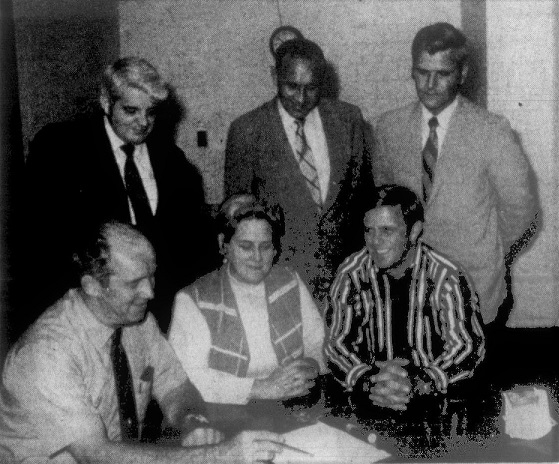
Estimates of how much money was needed to start the program varied. An estimate as early as 1969 calculated that a total of $5,000 to $8,000 was needed to hire a coach and buy equipment. By September 1971, Jim Hay increased the possible cost to “more likely about $15,000.” One estimate, which did not include any detail of where funds would be spent, placed the possible cost at $40,000 to $50,000. After some serious discussion and fact-finding, the Football Committee placed their official estimate at $11,000 to get started and about $25,000 to sustain the program for the first two years.
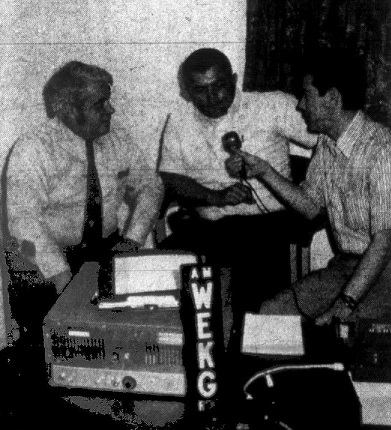
The Breathitt County Football Committee went to work. Jim Hay contacted other football programs across the state and got copies of their budgets. Hay taped interviews and ran them on his radio station with coaches, including Floyd Hines of Leslie County, Tony Lanham, formerly of Covington Catholic High School, University of Kentucky Assistant Coach George Ham, and others. The Committee decided that the community must first understand football before the community would support the new program, so they adopted an “educate and fund” initiative.
The Football Committee met with Ham and Lantham for over two hours on October 8, 1971, to discuss Breathitt’s needs and plans. Hatmaker later said the coaches gave the committee “a world of valuable information and much encouragement.” Ham told the Committee that they knew of the strength of the “rough boys” of Breathitt County and their formidable reputation. He only half-heartedly joked, “We want to help because we’re just greedy enough to hope you’ll have a Breathitt County boy who would make a great football player at UK.”
Floyd Hines gave the Football Committee a detailed list of equipment and other items to purchase. The estimate indicated a total of approximately $100-$125 to fully and adequately equip each player. Hines’ analysis of the program’s needs included $1,000 for insurance, $400 for meals on road trips, $400 for home game officials, $100 for travel expenses, $2,000 for home and away uniforms, $4,000 for pads and equipment, and more than $3,000 for field equipment and a scoreboard. Coach Hines calculated that at least $10,900 was needed to get started. He recommended that the school form a “boosters or a quarterback’s club” to help fund and support the players.
The Football Committee set the goal at $25,000 and developed a plan to use gate receipts from attendance, concessions, fundraising projects, and donations to help start and sustain the program. They also agreed to reduce the amount needed by foregoing a lighted field and to play all the games in that daytime until upgrades could be made to a field that still needed to be built.
The Breathitt County Football Committee called for a public meeting on November 22, 1971, to answer questions and provide additional information. Hay announced that Coaches Tony Lanham of the University of Kentucky, Floyd Hines of Leslie County, and Bruce Howard of Johnson Central would be there to address the crowd. A large crowd gathered in the Circuit Courtroom at the Breathitt County Courthouse to discuss football.
The coaches spoke and then answered questions from the audience about finances, methods, the advantages of sports, the need for a team, and many other topics. According to The Jackson Times, they were honest and “pulled no punches” as they discussed the “many difficulties that the team will face over several years” as they established systems and traditions. “Winning is not assured and takes a long time to master,” Hines noted. “You must be prepared to lose while you learn before you can understand the power of victory.”
Following the discussion with the Coaches, Superintendent Eugene Sebastian stood and stressed the need for the community to raise funds to start the program. He talked about his hopes for the program and the positives that a team could be for the school system and the community. “I think we can do it… with help from the community,” Sebastian told the crowd. The crowd erupted with loud cheers and applause.
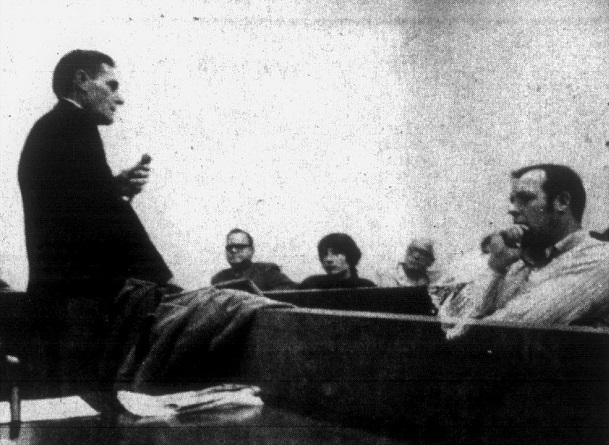
Sebastian told the crowd during his presentation that he had decided to “support the effort” and that the Board would help hire a coach if the community would raise the rest of the funds. He told the crowd, “If we are going to do this, we’re going to do it right.” He signaled a complete reversal of his opposition and discussed the Board’s commitment to fund bleachers, lights, and “the right type of field.” Sebastian presented several ideas, including filling the river bank with dirt from “some highway project” to create a field opposite the Breathitt Coliseum.
Sebastian shocked the crowd when he announced that he had appointed a committee to review the entire physical education program in the Breathitt County School system and to study the feasibility of constructing a “stadium or bowl” that could be used for football, school, and other community events. He appointed Burton Herald as Chairman and Johnny R. Herald, Nancy Begley, R. D. Gabbard, Jim Hay, and Millard Tolliver to serve on the Committee and to bring recommendations soon to the Board. “We need a stadium for other things too… for instance, I’d like to see a good horse show after our fair every year,” Sebastian concluded with a smile.
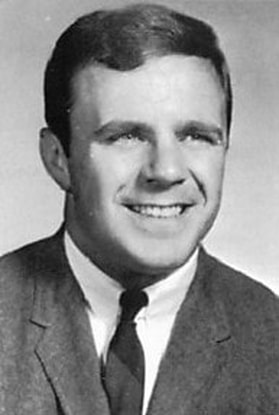
The discussion returned again to the financial portion of the process. Coach Tony Lantham stood and offered twenty dollars toward the process. That first donation was soon matched by many in the room. Victor Jones pledged $200 from the community around Caney School. Businessmen in the room began to commit money personally and from their organizations. Louise Hatmaker quickly began to scribble down the pledges. From around the room, pledges and cash poured in faster than Hatmaker could record them.
A financial committee was appointed to accept the funds to be held at The Jackson Times office until a bank account could be opened. The Football Committee also received offers to help move dirt, build a field, and “everything and anything they needed” to move forward. When the meeting ended and the smiling football supporters left, the final tally was more than $4,000 in cash and pledges.
“This is going to happen,” Sebastian told Hatmaker with a smile. “It is really going to happen.”
One significant need remained unresolved. Sebastian closed his comments with what he believed was the most crucial step left to take. He said that he thought the Football Committee was “moving in the right direction” but told those gathered that the Board needed to hire the “right kind of coach” and that it needed to be done soon.
As far back as the October 8 meeting, Coach George Ham gave the Committee his “first and greatest advice.” Ham told the SAC members, “None of your plans will work, and nothing will ever happen until you do one thing- hire a coach.” He described the perfect coach to the Committee members by saying that the coach must be young, energetic, willing to work hard, and must understand football. Ham advised them that the success or failure of the program depended on the new coach and his ability to unite the community and speak on behalf of the school and players.
The fundraising continued, but the wheels of change moved slowly in Breathitt County. It took more than a year before the Breathitt County Board of Education found who they believed was the right man for the job. In January 1973, they hired a 23-year-old recent college graduate to organize and lead the first Breathitt High School football team. The new coach was a pole vaulter and diver at Eastern Kentucky University. He had never played “organized football” at the college level.
© 2023 Stephen D. Bowling


