By Stephen “Bookie” Bowling
The first hike is almost here. As we prepare for the 2026 Hiker Challenge, I am offering a few last-second hints, as we will soon be in the van, headed to the Northern Terminus. Here are some notes on four essentials that will help you finish this trail in the next eleven months.
Shoes
Over the years, I have seen just about everything on the trail. The most common sight is of hikers attempting the Challenge in untested shoes. Many step out of the van in brand-new shoes. Many have purchased the latest and greatest five-hundred-dollar hiking boots that have yet to be introduced to dirt. These new hikers head off down the trail and begin making adjustments. Usually, less than a mile in, there is a little tightening here and a loosening there.
It becomes a constant struggle, and they typically gain two large, fluid-filled “rewards” on their toes or feet for their unprepared attempts. Luckily, they usually don’t make the same mistake twice.
Get your shoes early and wear them. Buy a half-size larger than you normally wear to allow for expansion, as we have several 35-mile weekends ahead. Break them in far ahead of the first hike, not just from the couch to the refrigerator, as I do, but in the woods where they need to be tested and proven.
Work those shoes on elevation changes and especially on the downhills. It is never the distance that gets hikers; it’s the elevation change. Shoes are like a good riding horse; they will treat you well the more attention you pay to them, and the more they are used.
So, saddle up and hit the woods. The fastest way to end your Hiker Challenge dream is to mistreat or fail to listen to what your feet are telling you. Treat them well when you get home, too. You will learn that Epson Salts in a Sunday evening foot bath or a full tub make life on Monday possible.
Water System
Through the years, the difference between a good hike and a great hike is the favorability that you will survive. As an unspoken rule, the higher the likelihood you will still be alive on Monday, generally, the better the hike.
We will walk through and over a wide variety of fields, hills, ridgelines, valleys, and every landform in between. These areas have seen a myriad of uses over the years, including farm land, coal mines, industrial applications, nature preserves, national forests, and other pursuits.
The water that runs off these areas is, for the most part, perfectly safe, but some places are not. The Sheltowee Trace Association recommends that every hiker in the Challenge purchase, learn to use, and carry a water treatment or filtration system of their choosing. These systems come in various forms, including filters, tablets, and ultraviolet techniques, and should be tested by the user before use, beginning in January.
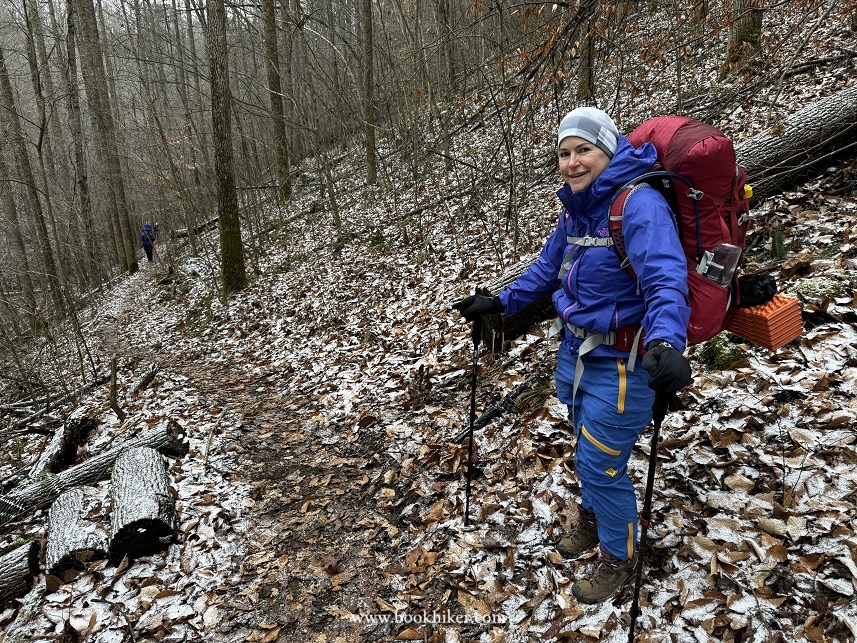
Many times, new hikers purchase a filter or device and attempt their first hike, only to find they are unable to operate the equipment. Don’t make this mistake. Get that kit out and practice at home. Don’t let the first time you have filtered be in the middle of a creek in January. Practice makes perfect.
Guidance
Getting lost in the woods on the Sheltowee Trace is almost never a concern. Almost. We haven’t lost anyone for more than a week or so in nearly a month, so we are on a nice little streak. Of course, I am kidding, but every hiker needs to take steps to ensure they can find their way on the trail.
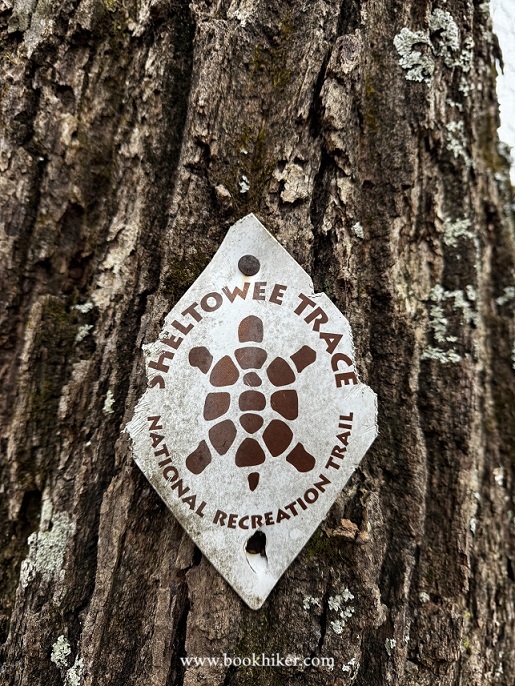
The trail is blazed with a variety of markers, which are usually easily seen. New reflective markers are being installed in various areas that feature mileage markings.
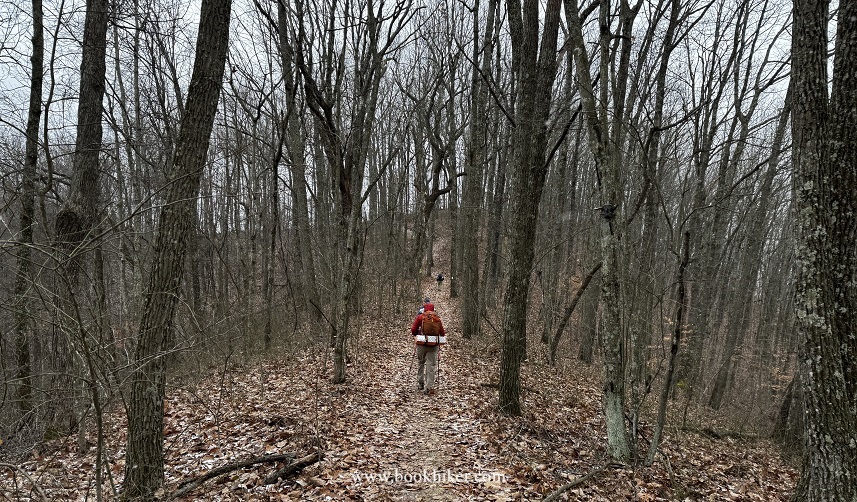
The best way to ensure you don’t get lost is to hike with others, purchase a set of maps (yes, actual paper maps), download the FarOut app, and buy the Sheltowee Trace Map.
The paper copy of the maps works great for home reference and planning, and they serve as a reliable backup navigation source while on the trail. It has some local landmarks that are not included in the digital map.
By far, the Sheltowee Trace Map on the FarOut app is the best source while on the trail. Its location services help hikers stay on track even in areas with no signal, and the app is very useful in keeping track of water sources, camp sites, and occasionally providing a sneak peek at the elevation map to see what lies between you and camp. Check-ins on the app also help support the STA, and the organization is paid for app usage. The revenue is reinvested in trail maintenance.
One other item is very helpful in understanding and planning the hike each month. In 2024, several members of the Sheltowee Trace Association wrote a new Trail Guide for the Sheltowee Trace. The guide included waypoints, historic facts, stories, and much more, including hundreds of color photos that help answer questions along the hike.
Like any great tool, you must use these items to get the most benefit from them. Purchase the trail guide, maps, and app ahead of the hikes and read them. Explore the app and learn its features. Unfold the maps and mentally walk your way through the hike, noting the important waypoints and milestones you will pass on the hike.
The trail will be much more enjoyable, and it is always a good day when you walk out of the woods at the right place on Sunday afternoon. There is no better feeling than seeing your car or the STA van waiting there in the sunlight. Be a good scout and be prepared.
Heart
Often in orientation, we talk about the “fleshly essentials.” Obviously, every hiker will face hard physical challenges. The ups on this trail are hard, and the downs are often even harder. Your strength and endurance will be challenged on this hike. Be prepared- No matter how prepared you are, you are never really ready for the Sheltowee.

Orientation also provided a warning about the mental challenge. Hiking is a constant battle between the mind telling the body to go on and the body telling the mind to shut up and mind its own business. And there you are, caught in the middle of an argument of your own making. The mind can be overcome with determination and a healthy group of trail friends who help pick you up (sometimes literally) and move you on down the trail.
The most challenging task to overcome is the emotional feat that lies ahead of you. Be prepared to smile, curse, kick, spit, lash out, laugh, groan, cry, threaten, bargain, and swear, often all in an hour. The emotional swings that new hikers and seasoned trekkers experience are far more difficult than you anticipate.
So how do you overcome that?

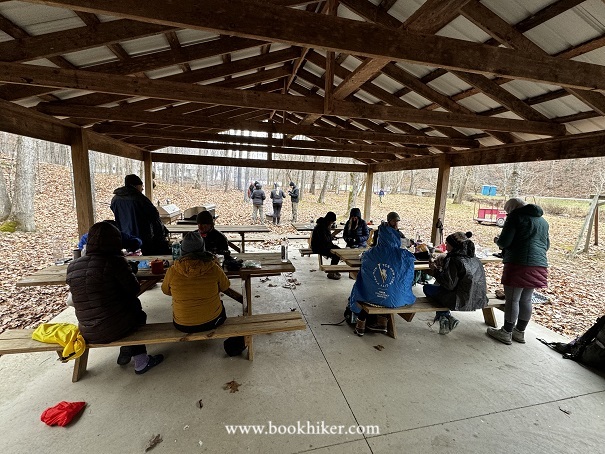
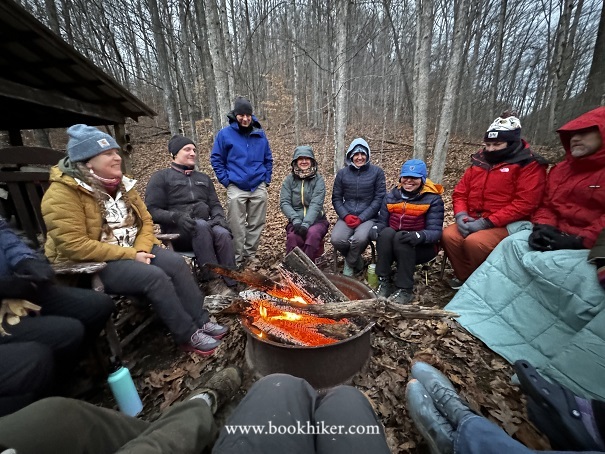
Find a group of hikers at your speed or with similar interests and bond with them on the trail. Perhaps you’ll find someone who can share the ride to the trailhead with you or someone who prefers not to talk on the trail. Form a “Tramily” (Trail Family) that can talk you through the trail with stories and tales (some you have heard a hundred times by November, but they are still great). A smile and a laugh will help melt the miles away, and I can guarantee they will help you finish this challenge.
Don’t walk this trail alone. I have done it, and the power and the draw of the Sheltowee Trace is the human experience that must be mixed in with the trees and the views.
These basic trips come from years of experience on the Appalachian Trail and the Sheltowee Trace. They come from having made the wrong choices, and through the power of multiple “trail preachers,” I finally saw the light (or headlamp).
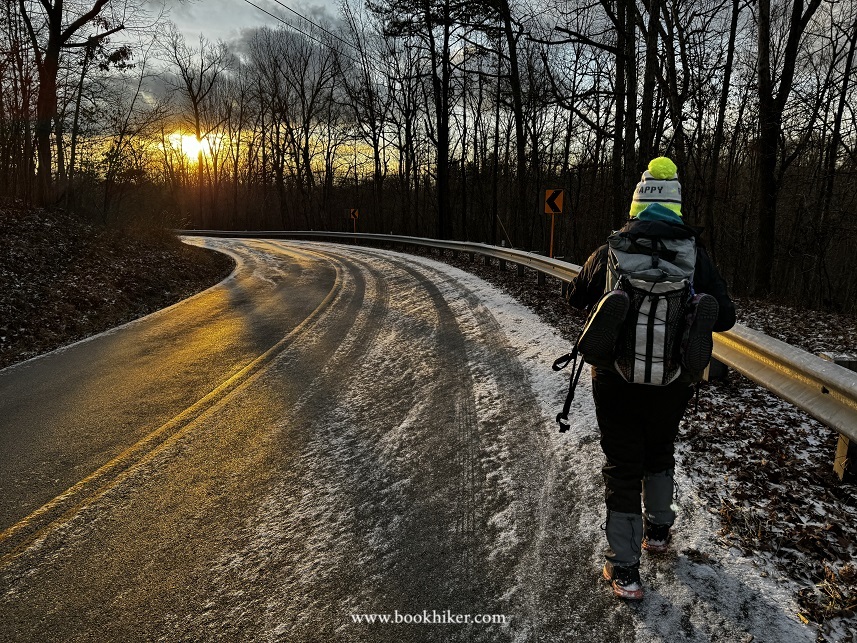
Our goal at the Sheltowee Trace Association is to help you become a confident and more efficient hiker, enabling you to complete the Challenge again or explore other trails and adventures.
Please feel free to ask any of our experienced hikers any questions you may have.
We are here to help and look forward to seeing each of you out there on the trail.
© 2026 Stephen D. Bowling

 Bookie on the Trail