Camp Wildcat Battlefield to Highway 192 Trailhead
Researched by Stephen D. Bowling
Leaving Camp Wildcat Battlefield Park, the road makes its way downhill through the Union defenses and into the Confederate lines as they advance up this roadway. The Confederates, under the command of General Felix K. Zollicoffer, attacked up this valley toward the Union lines on the ridges above. The Rebels’ advance followed the original path of the Wilderness Road widened by Daniel Boone in the 1770s. Several original stones still stand perched along the roadway, and some replacement stones have been placed to guide the early settlers along this “Pioneer Highway to the Adventure.”
Wilderness Road
The Wilderness Road was the major route used by early explorers and settlers who ventured over the crest of the Appalachian Mountains into the land known as “Kenta-kae.” In 1775, Daniel Boone blazed a trail into what is now Kentucky by using the Warrior’s Path and several large animal trails that led from Cumberland Gap to the flat lands of the Bluegrass section. Despite numerous challenges and setbacks, the first settlements in the states were established in the years that followed.

In 1795, the Kentucky Legislature approved the creation of a wide wagon road that permitted the transportation of goods from Virginia to Crab Orchard using a portion of the old Boone Trace through Rockcastle and Laurel Counties. The expanded trail, when completed, became known as the Wilderness Road. From Camp Wildcat Monument to the bridge over Hazel Patch Creek, the Sheltowee Trace follows much of the exact route of the Wilderness Road. At one point, the gravel roadway diverges from the original Wilderness Road, which followed the contours of Shetland Creek of the Rockcastle River.

Hazel Patch Cemetery
Near the bottom of the hill on Hazel Patch Road and just prior to the railroad tracks, a large and old cemetery sits in the small grove of pine trees on the left side of the roadway.

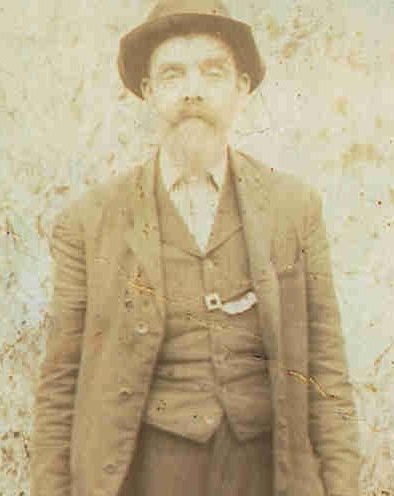
This is the Hazel Patch Cemetery. The cemetery was established in the 1850s and is the final resting place of the descendants of many early settlers along the Wilderness Road in Laurel County.
The majority of the graves in the Hazel Patch Cemetery are marked only with sandstone rocks which was a mountain custom.
One of the marked burials is for Richard E. Woodall. Woodall was born on June 9, 1844. in Pulaski County, Kentucky. He served as a Private in Company B of the 12th Kentucky Infantry. He received a Union Invalid Pension on January 12, 1866, due to severe injuries he received while fighting near Strawberry Plains, Tennessee, in February 1865. He suffered from his injuries for the rest of his life and died on October 24, 1924, at the age of 80.
During the course of your hike, you will walk past the graves of more than 40 veterans of the Civil War and at least two Revolutionary War Veterans.
The Tracks
The railroad tracks that run through Hazel Patch once hummed with long trains hauling coal, timber, and other resources from southeastern Kentucky. Today that traffic has slowed, but the railroad still routes several trains a day across these rails at the foot of the hill on Hazel Patch Road. Workmen for the Louisville & Nashville Railroad laid the first railroad tracks here in the late 1800s, creating a major commercial link between the northern states and the south. Today, many train carloads of chemicals and vehicles are carried across this line, owned by Chessie and Seaboard Express (CSX) Railroad.
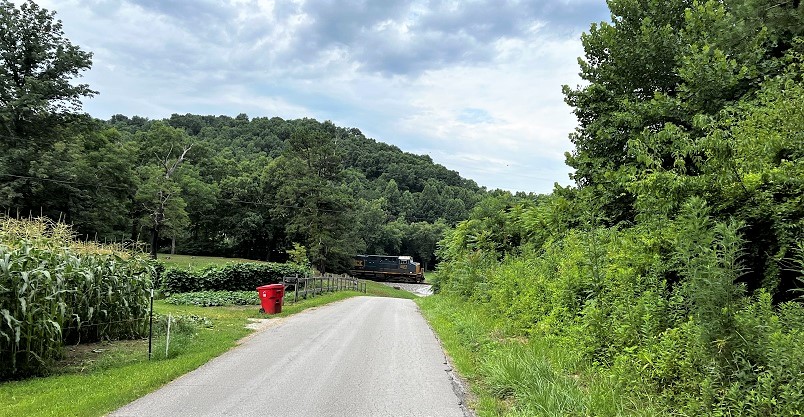
Some hikers will have the opportunity to hear and see a fully loaded train roll on these tracks. Unfortunately, if you do, you will be waiting for some time for the train to clear the tracks as the Trace crosses the rails at this intersection. Be very careful and do not attempt to crawl under, on, or over stopped train cars. They can start moving without any notice. Play it safe and look both ways before crossing. Be sure to watch your step.
Hazel Patch, Kentucky 40729
Named for the abundant hazelnut trees that once grew in the area, Hazel Patch, Kentucky, was once an important center of travel along the Wilderness Road. Animals, including squirrels and other small game, as well as buffalo and elk, frequented the site to eat the nuts as they fell from the trees each year. As a result, the Warriors Path and subsequent trails into the state, such as the Boone’s Trace and Skaggs Trace, passed near this area as long hunters tracked and harvested the game.

The Hazel Patch Post Office was established in 1804 and was located 6 miles east of this location. It closed in 1836. A second Post Office was established in 1867 and operated as Hazle Patch due to a clerical error at the United States Postal Service office in Washington. The Postal Service corrected the error in 1961. The Hazel Patch (now spelled correctly) ceased operations and closed permanently in 1974 as populations in the area dropped and postal business in the community slowed.
New Half-Way Point
Since its establishment in 1979, the Sheltowee Trace National Recreation Trail has evolved numerous times. Changes to the trail include numerous reroutes, improvements to creek crossings, road walk changes, and several extensions. The current trail is 343.3 miles and has not changed for several years. Work is underway to move the Southern Terminus of the Sheltowee more than 10 miles south from Burnt Mill Bridge to Rugby, Tennessee.

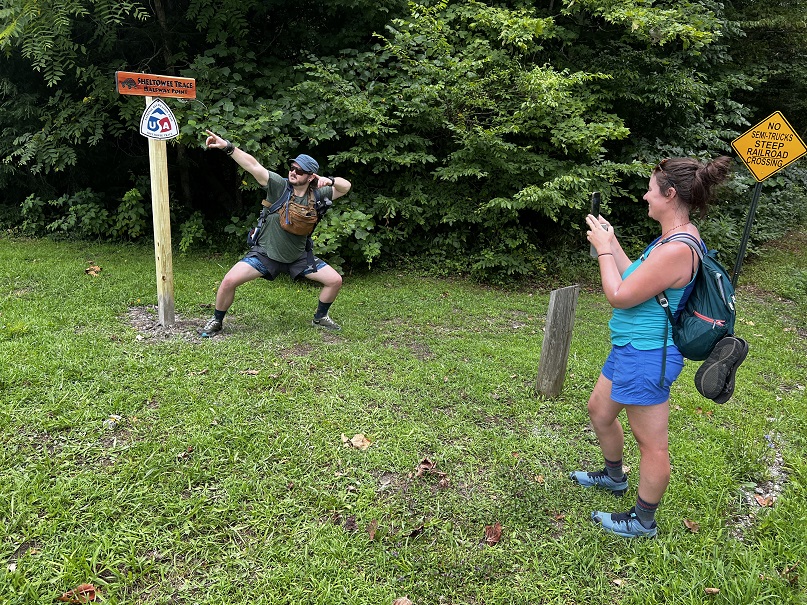
The addition of miles to the southern end of the trail and the establishment of a new Southern Terminus changed the location of the Half-Way point. Long-time Sheltowee Trace supporter and former professional shuttleman Billy Sherlin made, donated, and installed a new halfway sign in July 2022. During Hike 6, Challengers passed the old Half-Way Point sign on Parker Branch. While the trail may not be completed to Rugby by November, the new sign has been installed, and the 2022 Class will be the only class to hike past the official Half-Way Point twice in one year.
Highway 25
Stretching from Covington, Kentucky, to Brunswick, Georgia, U.S. 25 is a north-south corridor that runs through Kentucky, Tennessee, North Carolina, South Carolina, and Georgia for a total of 750 miles. The road, built primarily with state funds, was designated as “US 25” on November 11, 1926, with the implementation of the United States Numbered Highway System.
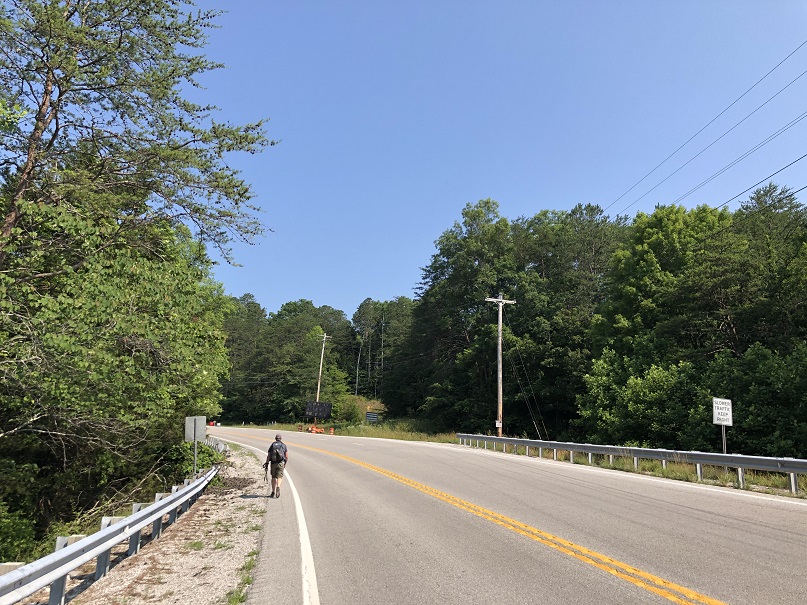
The original route, constructed between 1915 to 1929 as the Dixie Highway, was widened and improved to accommodate larger-sized vehicles. The roadway was eventually lengthened to create a route from Georgia to Michigan. In 1974, the sections of the roadway in Ohio and Michigan were eliminated and the northern terminus was established at the Clay Wade Bridge at Covington. Most of the traffic that once drove on US 25 migrated to Interstate 75 when the roadway was completed in the late 1960s and early 1970s. As you walk this short road section, remember it is still a very busy roadway with ATV trailers and other vehicles whizzing by.
Interstate 75
Interstate 75 is the major North-South roadway that traverses the Commonwealth of Kentucky. The modern four to six-lane roadway stretches more than 191.7 miles in Kentucky from Covington in the north to the Tennessee border. The roadway is designated as “limited access” by the Interstate Highway System and has a speed limit (or suggested speed limit) of 70 miles an hour for most of its length.


The Interstate was one of the major highways planned for the state of Kentucky during the 1950s as a part of the 41,000 Dwight D. Eisenhower National System of Interstate and Defense Highways in the United States. The Kentucky section of Interstate 75 was completed and opened in 1970. (The state of Kentucky immediately started a widening project, which is still ongoing- now in its 75th year, it seems.) The last section was officially opened in 1992 in Florida.
Millions of trucks and vehicles travel this vital thoroughfare each day, and state construction crews work hard to keep some form of construction going year-round to help slow down the traffic in Kentucky, especially in Laurel and Rockcastle Counties.
49er Diner
After leaving Highway 25 and climbing up the hill and over the interstate on Highway 909, the lights and sounds of a truck stop will come into view. Idling eighteen-wheelers and vehicles coming and going keep the ramp off and onto I-75 very busy. Located on the west side of Interstate 75 are a small gas station and cafe known as the 49er Diner.

The Diner offers a place to take a break, buy a cold drink and some snacks, or order a cheese hamburger or some of the best biscuits and gravy in the area. It is a great place to visit to discover some of the local customs and a perfect way to prepare for the hill climb and the rugged trail ahead. If for no other reason, take a break from the trail at the 49er to experience real and genuine “truck stop culture.” Don’t get drawn in too much by its glamorous side. You still have miles to go before you reach camp.

Red Rocks
On the ridge between 49er Diner and Hawk Creek, the Trace follows the remnants of an old oil/logging trail later adopted by ATVers. Over the years, overuse and poor management of this area led to most of the topsoil being depleted from the area leaving some beautiful red sandstone exposed for the trail.

The Forest Service constructed several varieties of “tank traps,” including deep trenches and other obstacles, to limit the use of this area to hikers only as a part of their management of the trail in his section. Be careful in this area during periods of snow and ice or if the rocks are wet, as they can become very slippery. Enjoy the colors, but the sun and elevation change will take their toll.
Hawk Creek Log Bridge
Hawk Creek Suspension Bridge was a large bridge that spanned the knee-deep waters of Hawk Creek, a tributary of the Rockcastle River. For more than 25 years, the bridge spared hikers from wading the cold currents of Hawk Creek. During record-setting rainfall in 2021, several large trees fell and destroyed the expanse of the Bridge. Hikers were once again forced to ford the stream.

The destroyed bridge was added to the hundreds of maintenance items currently awaiting either funding or attention by the Forest Service after recent staffing and budget cuts. Ironically, the trail maintainers in this section used the fallen trees to bridge the stream. The trail now requires a balanced walk across a log bridge made from the tree that destroyed the bridge. A handrail made from pieces of the old bridge will aid you in your crossing. No timeline for replacement of the bridge has been established.

Highway 80
Highway 80 is a limited-access highway that crosses the Commonwealth of Kentucky from Columbus in Hickman County to Elkhorn City in Pike County. The road, which runs more than 483 miles, is one of the primary east-west connectors that crosses the state. Originally constructed beginning in the 1930s, Highway 80 once saw more coal hauled over its roadways than any other route in the state.
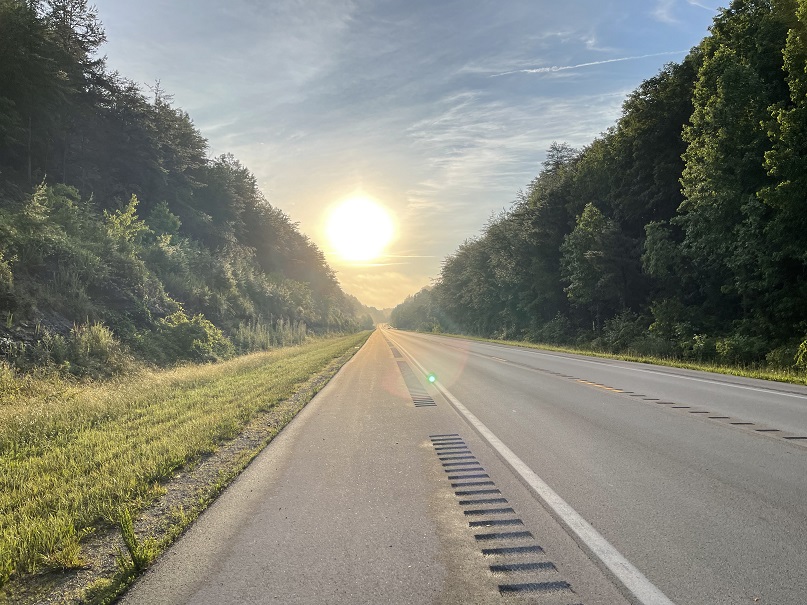
The Sheltowee Trace crosses Highway 80 at one location. Hikers will emerge from the woods and walk about one-quarter of a mile along the roadway. Being certain to check for traffic, the Sheltowee crosses the roadway and reenters the woods. The road is usually busy, and some patience and a great deal of care could be needed to get across.
Camp Barbour
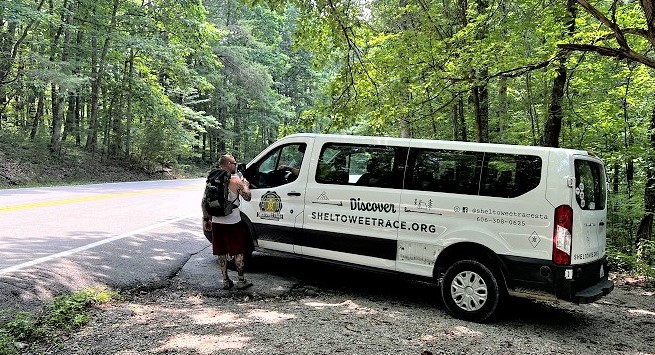
Several years ago, Steve Barbour purchased a tract of land along Forest Service Road 4255. He established a small camp as a place of rest and refuge for weary hikers who venture through this section of the Sheltowee Trace. The property was purchased by the Sheltowee Trace Association in 2023.
Referred to as “Camp 4255″ or simply “Camp Steve Barbour” by most, the roadside camp is available for hikers due to the lack of suitable camping spots along this section of the hike. All that is asked is that hikers maintain the site and respect the property by practicing all of the Leave No Trace principles.

The construction of a moldering privy by Steve and the installation of a bear-proof food storage container as a gift from the Hiking Class of 2021 make Camp Steve Barbour a very nice stop on the way south or north. Other improvements, including a shelter, have been funded and are planned for Camp Barbour. Bears are active in the 4255 area and in the Pine Creek section. Hikers are advised to follow all food storage rules to keep the camp an enjoyable stop for all.

Pine Creek Church and Cemetery
The Pine Creek Church was established about 1850 by members of several prominent families from the area. The church, which has services each Monday evening, was originally on the circuit. There was no permanent minister, but a traveling minister visited the church on a set Sunday of the month. As the population of the area grew, the original church was torn down and replaced with the current concrete block structure.

The cemetery beside the church is known as the Pine Creek Church Cemetery and also as the Betty Barnes Cemetery. There are currently more than 264 burials in this cemetery from several primary families who lived in the area, including the Adams, Barnes, Goforth, and Whitaker families. The oldest marked grave at this location was Elizabeth (Morgan) Hash, who died in 1869 at the age of 35.
Sinking Creek Wade
A high suspension bridge served many years as the only dry crossing spanning the thigh-high waters of Sinking Creek on the Sheltowee Trace. During a series of record-setting rainfalls in early 2021, a limb from a very large tree fell and destroyed a portion of the central section of the Sinking Creek Bridge. The trail now requires a slippery wade through the water rather than a crossing on the bridge above the creek. Efforts are underway to repair the span, but until then, be prepared to get your toes, legs, and maybe even more wet.
Bunch, Kentucky
The Sheltowee Trace passes near the small community of Bunch, Kentucky. The small, rural section of Laurel County was established in the late 1800s. The Bunch Post Office opened in the Fadden General Store on December 11, 1905, with John Y. W. Fadden as the first Postmaster. The community never had more than 100 residents, and the store served as the retail, commercial, and community center.

Several postmasters, including its last Postmaster, Ora Reynolds, operated the small post office, but the Postal Service discontinued mail delivery and closed the Bunch Post Office on November 27, 1959. Most hikers pass by the ghost town of Bunch and never know that it once was a thriving community.
Johnny Mac Cemetery
As the Sheltowee drops over into Big and Little Dog Fork, the Trace passes the Johnny Mac Cemetery, which is nearly hidden about 25 yards in the woods. The small cemetery has approximately 12 graves, including two marked graves for John McFadden, the cemetery’s namesake. John M. McFadden was born in 1819 and was the son of Jesse and Sally Ruth (Chesnut) McFadden.
During the Civil War, McFadden served as a Sergeant in Company H of the 24th Kentucky Volunteer Infantry in the Union Army. He was married to Bartheny Young (1819-1917). He received a Federal Invalid Pension on February 6, 1893, for injuries he received while in service during the war. He died a little more than a year later, on May 13, 1894.
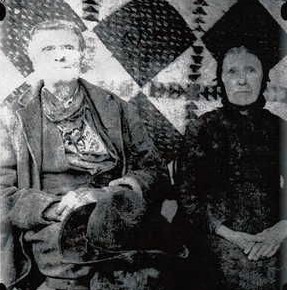
A dispute between members of the family resulted in two different claims as to the exact location of his actual grave. In an effort to settle the dispute of which grave belonged to the family patriarch, a military stone was ordered and placed by members of the family. Certain that the location was still incorrect, other family members installed a metal sign at another grave insisting that “Here Lies John McFadden.”


Take a second to step off the trail to visit this small cemetery and see if you can determine which grave is the real final resting place of Sergeant John McFadden.
A Healing Forest
A storm driven by high winds tore through this section of the Daniel Boone Forest on the afternoon of July 8, 1991. The winds, which were determined to be straight-line rather than tornadic, blew down thousands of trees and damaged more than 1,000 acres of the forest. Forest Service personnel estimated that the winds toppled enough wood to build more than 250 homes.
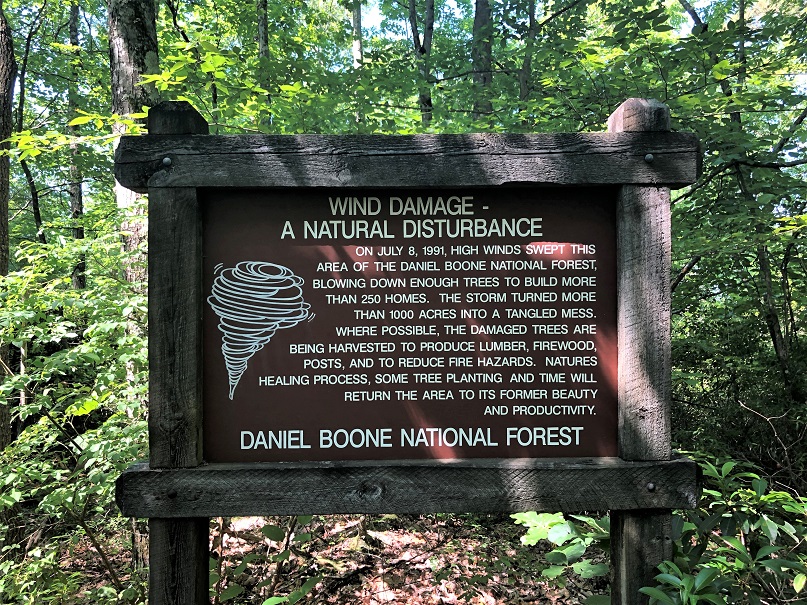
Rather than allow the trees to “rot and be wasted,” the National Forest Service awarded permits to local loggers to harvest the fallen trees and clear the debris from the Sheltowee Trace and other trails and roadways. According to officials, the combination of several tree planting efforts and the natural processes of reforestation, estimates indicate that the forest here will return to its pre-storm growth in 40-50 years. Many hikers pass through this section of the Trace and never notice the transformation the high winds caused on this section of the forest. As nature heals itself, a forest service sign was placed along the Trace to explain and commemorate the event.
Vanhook Falls
Vanhook Falls is one of the most visited waterfalls in Kentucky. At 37 feet tall and 16 feet wide, the waterfall is a popular destination for Sheltowee Trace Hikers and day hikers who complete the 5-mile round trip from the nearby 192 Trailhead.
The falls were created when the water of Vanhook Branch poured over the edge of a solid layer of sandstone and plunged into the valley below as the water made its way to the Vanhook Gorge. Vanhook Branch merges with Pound Branch about a quarter mile below Vanhook Falls to help create Cane Creek.

Recent work near the falls has created several nice benches, which make for a great lunch break, and some steps to make climbing the hill beside the falls much easier.
Cane Creek Gorge
Cane Creek is formed by the union of Cane Branch, Pond Branch, Pounder Branch, Vanhook Branch, and Grassy Branch. Over the centuries, the flowing waters of Cane Creek carved a deep gorge into the sandstone of the area. The result was a very interesting valley known as the Cane Creek Gorge. The area includes numerous waterfalls and cascades.
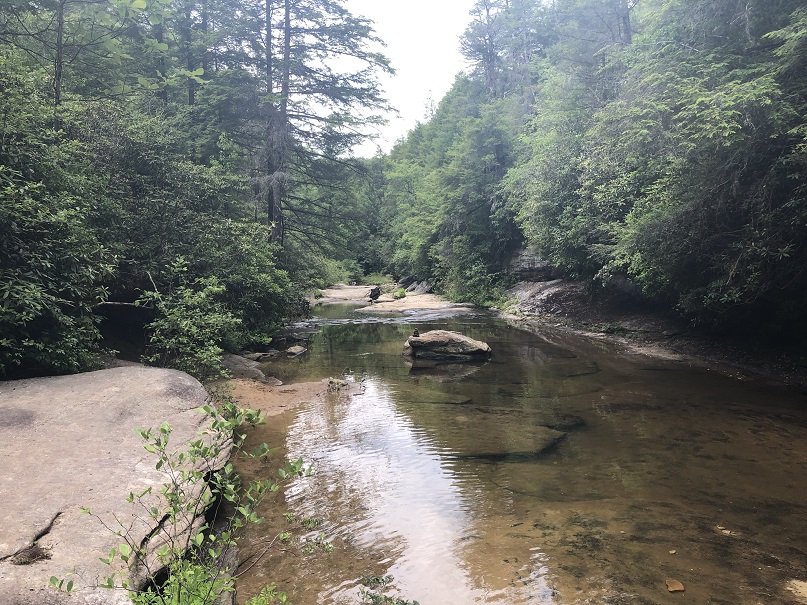
The Gorge is located in the Cane Creek Wildlife Management Area, which is operated by the Kentucky Department of Fish and Wildlife Resources in cooperation with the United States Forest Service. Cane Creek flows westward and empties into the Rockcastle River just below the Rockcastle Narrows and opposite the Bee Rock Recreation area operated by the Forest Service.

Pounder Cascades
A series of small waterfalls and cascades on Pounder Branch make the valley roar with the sounds of falling water. After leaving the Cane Creek Gorge, hikers climb out of Pounder Branch and up to Highway 192. The ascent takes hikers by Pounder Gorge Falls, Pounder Falls, near Lava Falls, and by five other waterfalls. The sounds from these natural wonders can be heard, but the dense undergrowth often hides these sites during the summer months.

Serval of these small waterfalls and pools of standing pools of water lie close to the trail near the head of Pounder Branch. These pools make for great places to stop and take a break on hot days. Several of the pools are deep enough to wade and swim in to cool off. Take advantage of every opportunity to cool down and take a break from the heat.
Pounder Arch
Located on the hillside, approximately 50 feet from the trail and about one mile beyond the Pounder Gorge, is Pounder Arch. The small 8-foot arch on the hillside to your right is easily missed as hikers pass by this small natural wonder. The arch was created when a wind-created rock shelter in the Rockcastle Sandstone layer collapsed near the base of the rock section, leaving a portion of the front of the shelter intact.
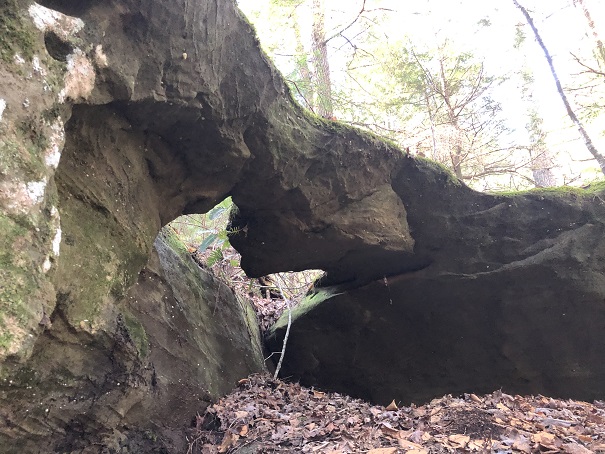
The arch is best seen during the afternoon when the rays of sunlight help define the opening in this layer of sandstone.
Highway 192 Trailhead
Hike 7 ends at the Sheltowee Trace Trailhead, located at the intersection of Highway 192 and Highway 1193 near Laurel River Lake in the Baldrock community. The trailhead is easily accessible but can only accommodate about 15 vehicles. It is a very popular and busy trailhead, possibly the most used along the Sheltowee due to its proximity to Vanhook Falls and easy access to Laurel Lake.

I hope you have a great hike and enjoy your time on the Sheltowee Trace.
© 2024 Stephen D. Bowling

 Bookie on the Trail