By Stephen D. Bowling
Adolf Rupp called it a “Round Ball Palace.” He pronounced it the “greatest” high school gym in Kentucky during his 1964 visit. Since it opened, the Breathitt Coliseum has hosted thousands of basketball games, graduations, concerts, and community events.
In 1935, Superintendent Marie R. Turner and the Breathitt County School Board envisioned an active campus on the banks of the Kentucky River on the old James Hargis Farm. They moved Breathitt High School from Quicksand to Jackson and welcomed First Lady Eleanor Roosevelt to town in January 1938 to dedicate the new building. The Board’s vision also included a large building to be used by the community for sporting events and other community activities. The Board of Education continued that vision but could never access the funds needed to complete this structure.
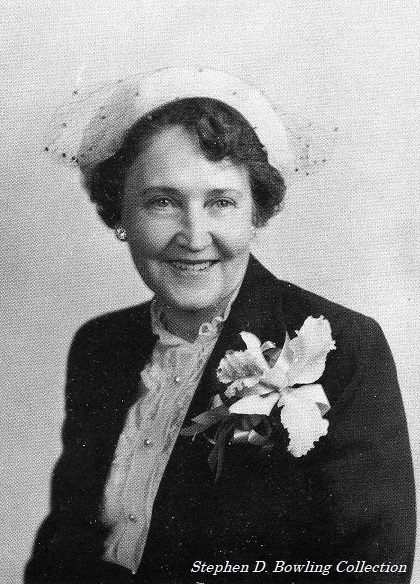
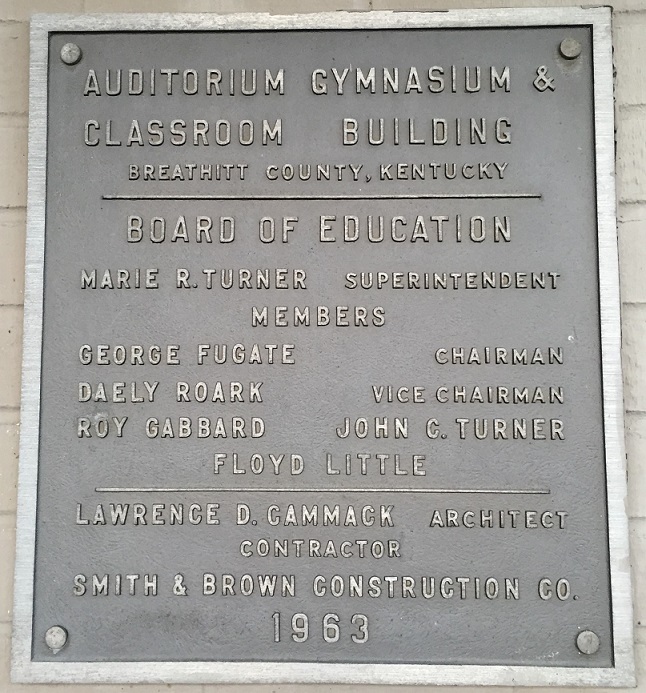
On July 19, 1962, Superintendent Marie R. Turner announced the Board’s intention to proceed with the project. She told reporters and the community that the Board of Education voted to seek bids for a new “multi-purpose Auditorium-Gymnasium-Classroom Building” large enough to hold 4,000 on the campus of Breathitt High School. The Board’s vision was precise, saying the building “will be of circular construction, the heart of which will be a combination auditorium-gymnasium with floor space and seating area of approximately 40,000 square feet.”
One of the most welcomed features of the proposed building was the addition of ten new classrooms to help alleviate the overcrowded classroom conditions at Breathitt High School. Turner told those gathered at the Board meeting she believed “the new building will give us room to grow and handle the increased enrollment for at least the next ten years.” Even more excited was BHS Basketball Coach Fairce Woods.
After four straight 14th Region Championships, the new facility would finally give Bobcats a new, permanent home court. Throughout Woods’ long championship runs, most of Breathitt’s home games were played in a rented gym at Lees College because the small gym on the BHS campus would not hold the large crowds that came to watch Breathitt’s “woodsmen,” as they were often referred to in the local newspaper. Observers were pleased that Breathitt County “may soon play host to the 14th Regional Tournament since the new structure will greatly exceed the seating capacity of Memorial Gymnasium at Hazard.”
Lawrence D. Cammack, a Lexington architect hired by the Board to design a “unique structure,” estimated that the new building would cost $500,000. His design featured “self-supporting beams” attached to a central hub to “eliminate columns and improve views” of the large crowds expected at events. The architect called his design a coliseum based on its round shape and, as he joked, “the battles that would be held there.”
On July 19, 1962, the first advertisement for bids was printed in The Jackson Times and other newspapers around the states, soliciting bids of all “labor, materials and performing all work outlined in the plans, specifications, and contract documents.” The ads ran for the next two weeks, and the Board met to open bids on August 1, 1962.
Superintendent Marie R. Turner opened several bids, and Smith & Brown Construction Company of Hazard’s estimate of $474,746 was the low bid. Over the next thirty days, the company and the Board of Education negotiated a long and detailed contract. Smith & Brown moved most of their equipment from a construction site on the campus of the University of Kentucky at Quicksand to Jackson after signing the final contract on August 31. After the state approved the final plans in late September, construction Supervisor Kenneth Lloyd Tate wasted no time, and construction started on October 2, 1962.
Construction moved slowly. Smith and Brown struggled with the clay ground at the site and worked to divert several natural springs away from the structure’s foundation. The design itself presented numerous challenges to overcome. The foundation and walls of the lower levels went up quicker than expected. Construction of the upper walls slowed due to a cold and unusually wet Spring. By July 1963, construction crews lifted the first of the large, laminated beams into place while Lawrence Cammack and several architects from around the world came to Jackson to watch the process. With the roof’s installation, the Breathitt Coliseum project sped toward completion.
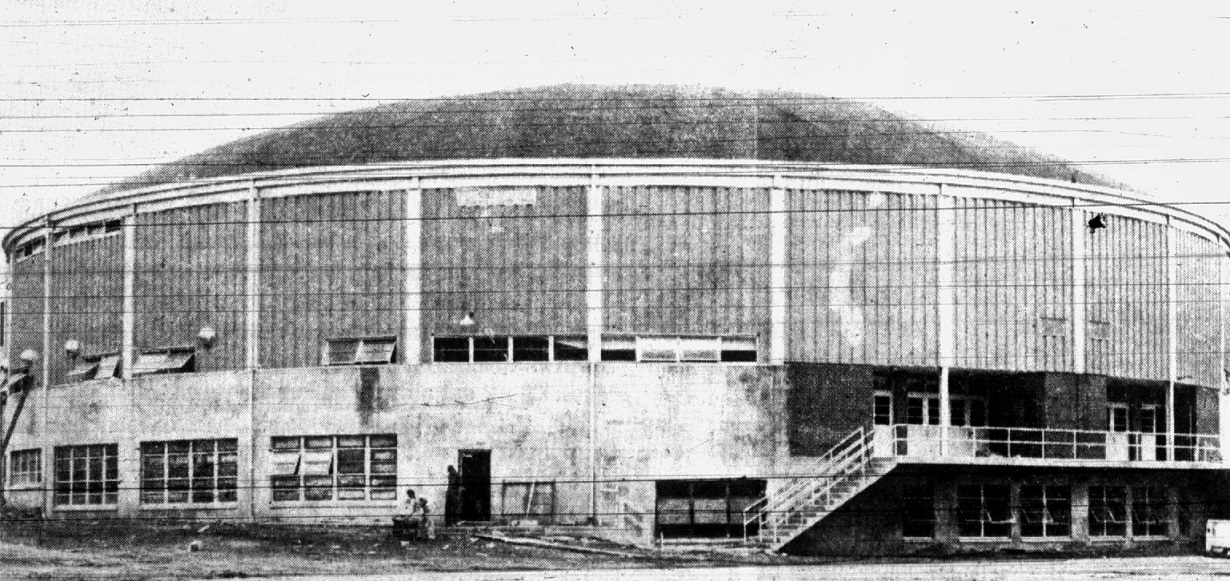
On May 7, 1964, with the building nearly finished, Marie R. Turner announced that First Lady Claudia Alta Johnson, better known as “Lady Bird,” had accepted an invitation to be the guest of honor and officially dedicate the new building on May 21, 1964. Former Governor Bert T. Combs, Congressman Carl D. Perkins, and Governor Edward “Ned” Breathitt accompanied Mrs. Johnson to Breathitt County, walked into the building with an honor escort from Little Red School comprised of James D. Fugate, William T. Strong, Jeffrey Howell, David Back, Roy Terry, and Ira Clemons wearing their basketball uniforms.

Mrs. Johnson received a “loud and thunderous round of applause” as she entered the new building, and the capacity crowd heard speeches and presentations from numerous dignitaries and guests. The Breathitt High School Band played, and the “Mistress of Ceremonies,” Treva T. Howell, introduced the First Lady. Running over an hour behind schedule, Johnson spoke for only a few minutes. She participated in a “scroll-signing” marking the ceremonial opening of the building for use by the people of Breathitt County. Less than a month later, the first BHS graduation in the new building was held on May 24, 1964.

A second dedication was held on Saturday, November 7, 1964, with another capacity crowd on hand for the festivities. Breathitt High School Coach Fairce O. Woods planned a “Sports Dedication” with ceremonies before the first scheduled basketball game in the new building. A “standing room only” crowd filled the wooden bleachers of the Coliseum to witness the inaugural basketball game, which pitted the Bobcats of Breathitt High School against the Owsley County Owls, coached by John Daniel Seale.
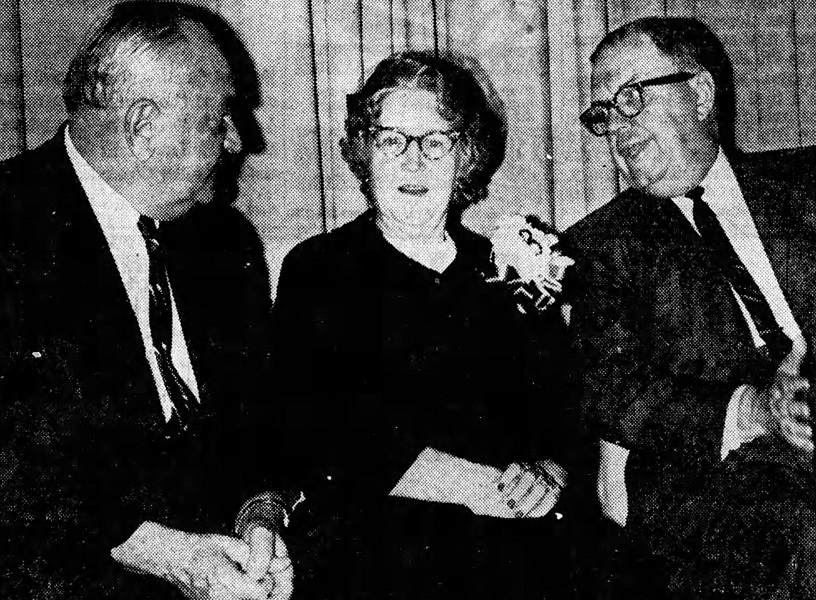
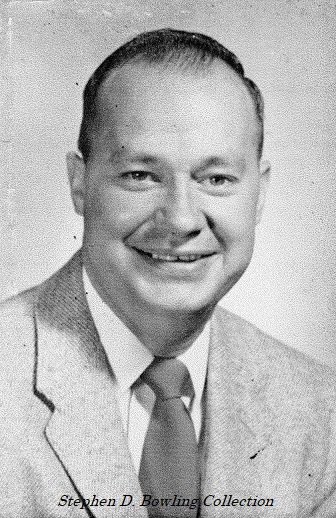
Master of Ceremonies Manuel Strong conducted the brief ceremony. He introduced the distinguished guests, including University of Kentucky Coach Adolph Rupp, Louisville Courier-Journal Sports Editor Earl Ruby, and Ted Sanford, Kentucky High School Athletic Association Commissioner. Coach Rupp, the guest speaker, called the facility a “marvel of basketball” and the “round ball palace” while lauding the effort of the people of Breathitt County to have the vision to build such a building. The Bobcats closed the night on a high note with a 96-36 victory over the Owls to properly christen the facility.
The Breathitt Coliseum would host many “battles” on the hardwood through the years. The Coliseum hosted its first 55th District and 14th Region Tournaments in 1965. From March 3-6, 1965, Breathitt High hosted the first 55th District at the Coliseum and recorded another District Championship for Breathitt after they defeated Hindman, Carr Creek, and Knott County. The first 14th Region Tournament at the new Breathitt Coliseum saw Breathitt fall to Leslie County in the second round by a score of 43-39 in double overtime. Hazard defeated Leslie by a score of 71-60 to claim the first regional tournament at the Coliseum.
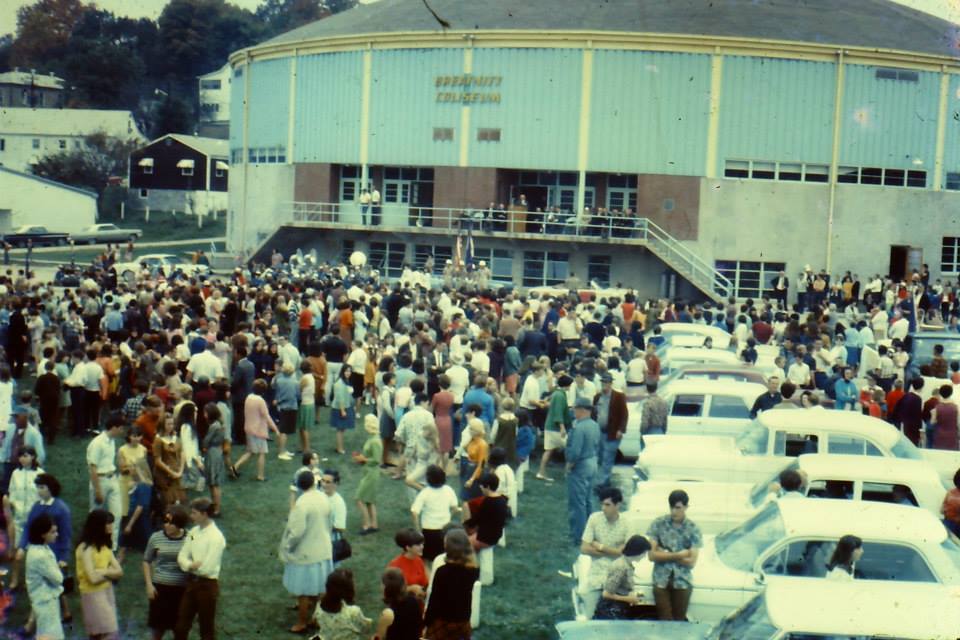
In the following years, hundreds of events, including circuses, wrestling matches, a Loretta Lynn concert, graduations, political rallies, and basketball games, found their way to the Breathitt Coliseum. On November 12, 1976, one notable event brought Coach Joe B. Hall and the University of Kentucky Wildcats to the Breathitt Coliseum for a practice and scrimmage.
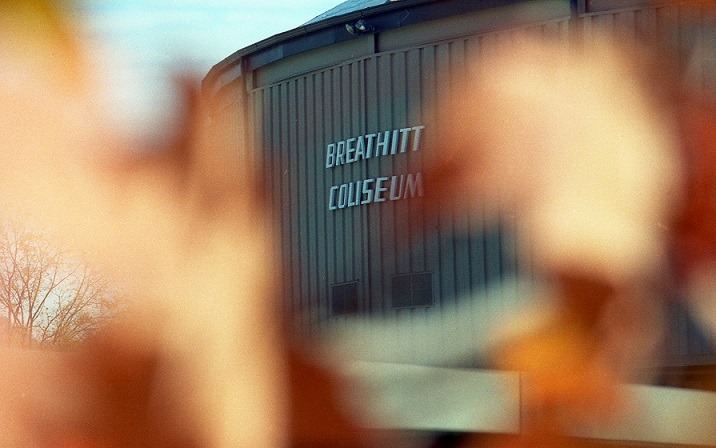
Over the years, neglect and pressure combined to stress the coliseum roof’s self-supporting beams. In 1991, restoration efforts sought to replace some of the rotting wood found in the building. The pine boards showed water seepage in numerous places, and Board members were concerned about the roof’s safety. Repeated inspections did not sound any alarms for structural integrity. Still, many knew that the Coliseum roof had issues.
On March 15, 1993, a snowstorm blanketed the area, and the added weight caused the area around the central point where the beams joined to “dimple.” State inspectors condemned the building for use “pending study and repairs” in mid-March. A long series of “conference meetings, inspections, and consultations” followed. Steve Marcum, an Engineer with Associated Designers, told the Breathitt County Board of Education that the building was unique and that only three or four similar structures still existed with that roofing system.
After some research, Marcum determined that the patent for the roofing system belonged to a company in the Netherlands that had gone out of business and could not repair the roof. Engineers determined that repair was not an option and that the entire building might need replacement. Superintendent Hargus Rogers met with the insurance company and decided that the building would be saved and the roof replaced with a new system. The insurance company valued the loss at $1,049,944 but specified that the entire roof system must be removed and replaced, and all interior work must be completed while remaining under budget. Marcum announced that the work should be completed by February 1, 1994, “barring any unforeseen circumstances.”
At 4:02 p.m. on the afternoon of Sunday, July 25, 1993, unforeseen circumstances arose. The multiple stresses on the roof system at the Breathitt Coliseum caused a catastrophic failure, and the entire roof system collapsed. The Kentucky Fire Marshal’s Office condemned the structure and closed the whole BHS campus until a stability assessment on the building was completed. A study of the remaining building revealed that the collapse did not damage the exterior walls, and renovation work sped up.
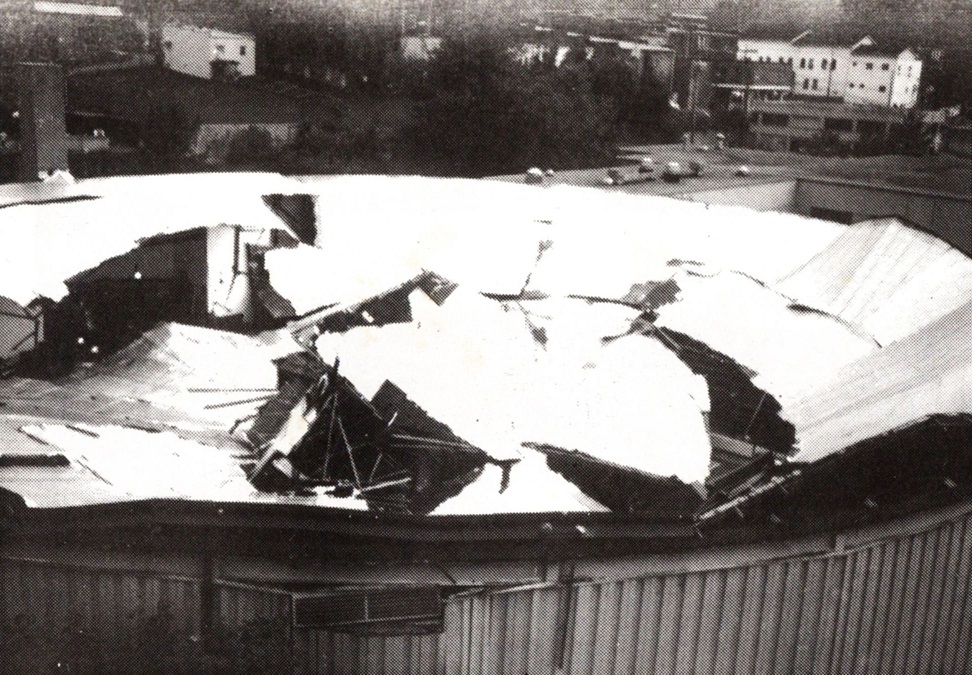
After the rubble was removed, cranes hoisted the first beam of the new roofing system into place on the afternoon of November 1, 1993. Construction moved quickly as construction crews systematically set the remaining beams and covered the Coliseum.
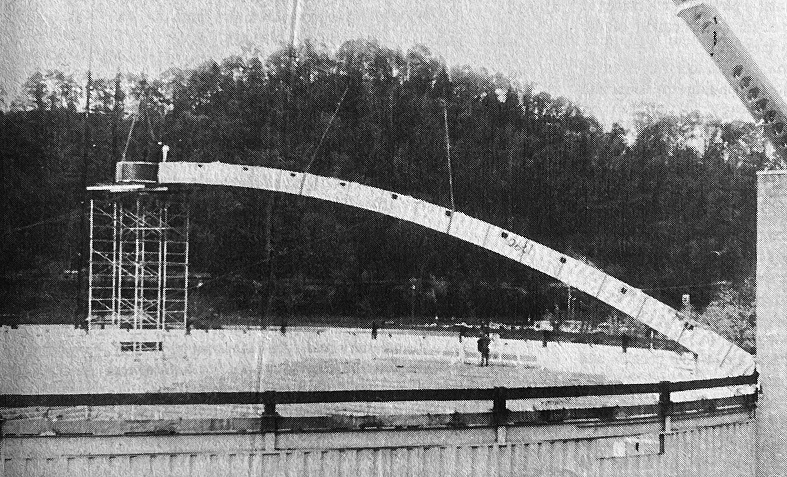
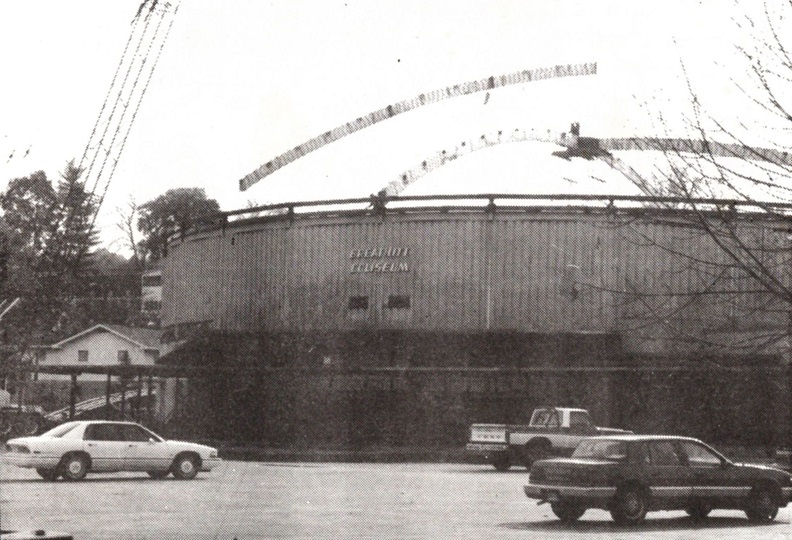

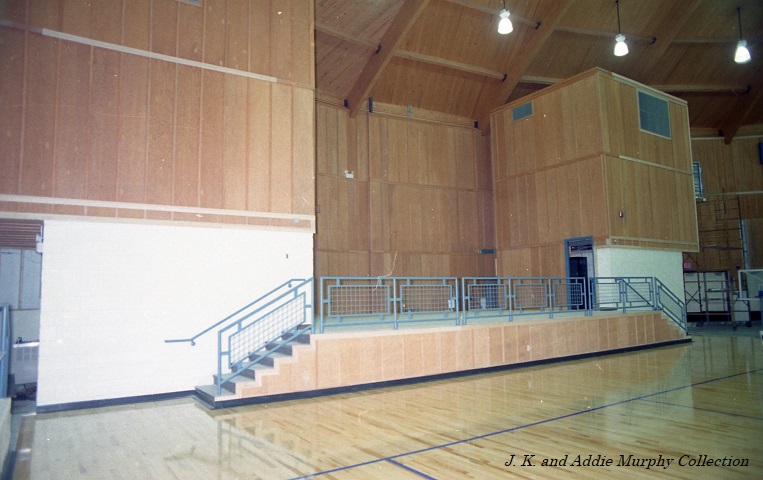
The newly renovated building reopened on October 2, 1994, with great fanfare and celebration. Representative Harold “Hal” Rogers compared the new maple floor in the coliseum to honey and called the remodeled structure a “pot of gold.” “The roof fell in, and now you have a pot of gold in the beautiful Coliseum,” Rogers said. “It fell in and has risen from the ashes like a phoenix.” Rogers praised the work and the newly remodeled classrooms during a building tour.
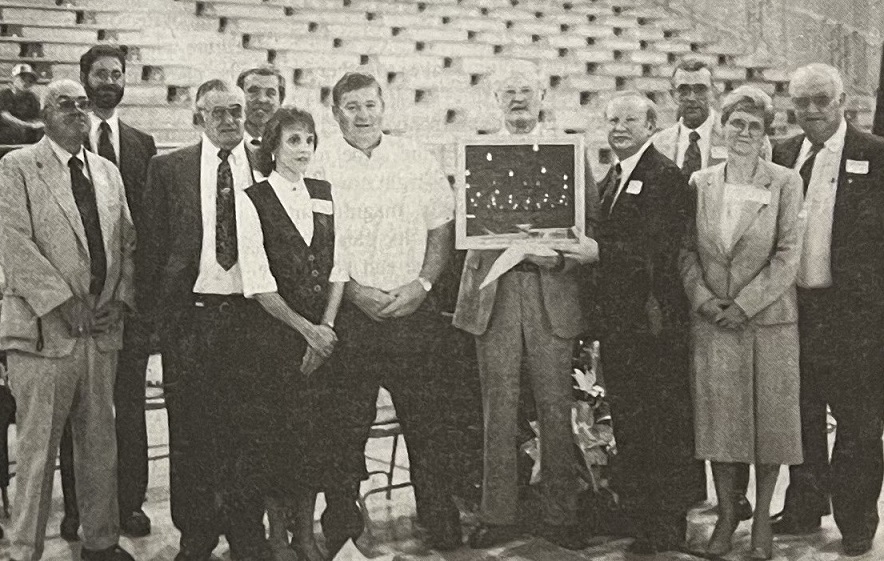

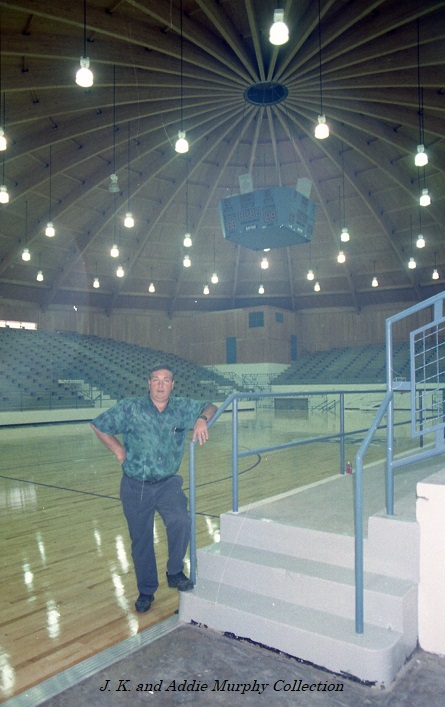
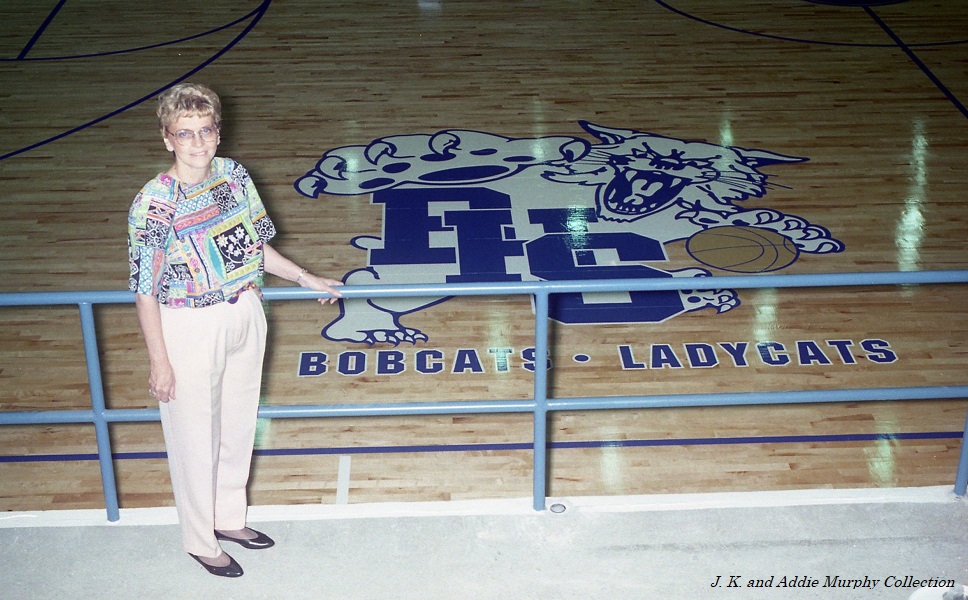

In the fall of 2000, the Breathitt County Board of Education, after some lobbying from former players, discussed the possibility of renaming the Coliseum in honor of the man who only coached four years there but was one of the driving forces that built the building. “The very fact that we even have our coliseum today is the direct result of Coach Woods’ coaching days at Breathitt High,” former player Doug Allen told The Jackson Times. After a unanimous vote by the Board of Education, Superintendent Hargus Roger and the Board announced on November 8, 2000, that the Breathitt Coliseum would be renamed the “Fairce O. Woods Coliseum.”

On December 16, 2000, more than a hundred former players, managers, basketball enthusiasts, and friends gathered at the Breathitt Coliseum to officially change the name. The event, Chaired by Doug Allen, honored Coach Woods for his efforts to promote the players and sport of basketball in Breathtit County. “I consider it a great honor,” Woods told the crowd. “In my life, with all my achievements, I consider my time in Breathitt County and this building the highlight of my life.” Coach Woods was also honored that evening at the Breathitt-Wolfe County basketball game – the first held in the newly renamed “Fairce O. Woods Coliseum.”
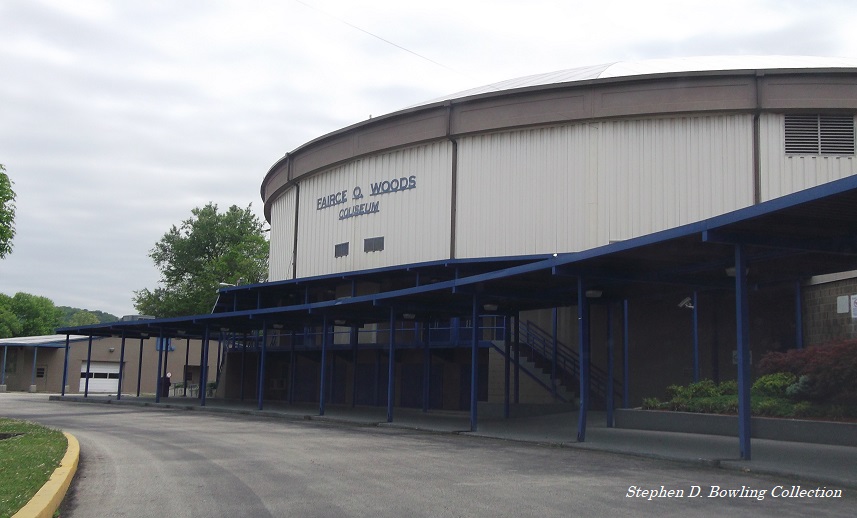
On May 3, 2020, workers repairing a leak in the roof of the coliseum accidentally set fire to the maple ceiling of the Fairce O. Wood Coliseum. The fire spread quickly and burned into the wooden walls inside the structure. Fire crews arrived on the scene at about 11:15 a.m. and quickly extinguished the fire, but considerable damage was done to the building and gym floor.


School Superintendent Phillip Watts’ press release later that day stated, “Thanks to the quick response of our firefighters, it looks like the building has been saved. If it wasn’t for them, the heat, smoke, and water damage would have severely impacted the entire building.” The Board and engineers worked to preserve and restore the building, which reopened several months later.
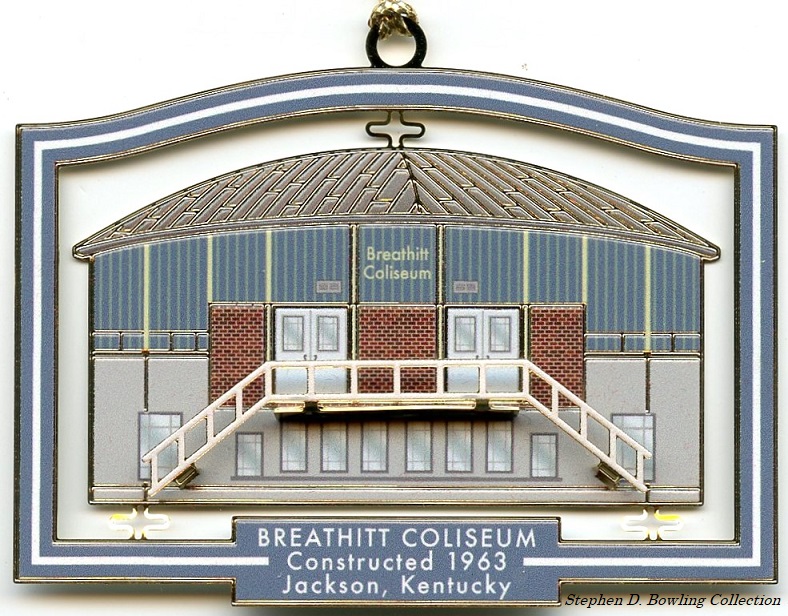
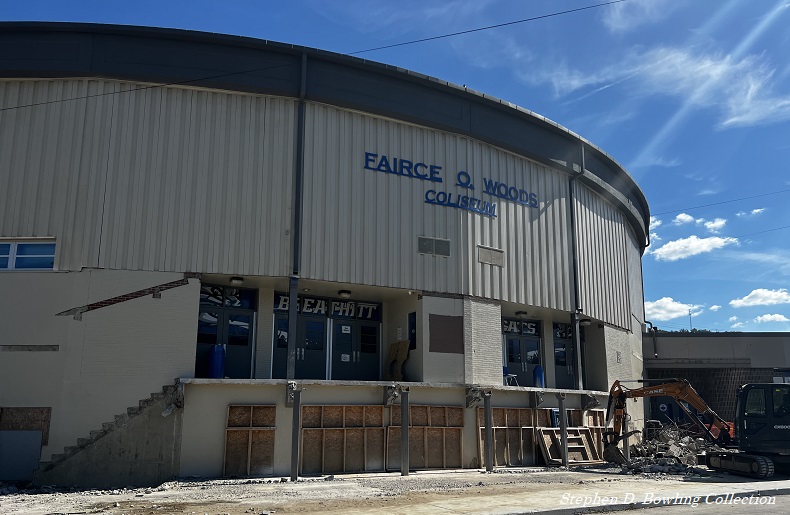
Through collapse, fire, and many other challenges, Breathitt High School’s “Round Ball Palace” still stands as a symbol of the Bobcats’ winning tradition and the commitment to the Breathitt County Board of Education’s vision of providing progressive facilities for community use. In the words of Lady Bird Johnson, “May this building always stand as a symbol of pride, success, and an unwavering community spirit to achieve and grow as a people.”
© 2023 Stephen D. Bowling

 Bookie on the Trail