By Stephen D. Bowling
The yellow sandstone walls of the Guerrant Memorial Presbyterian Church have graced Main Street for more than a hundred years as a symbol of stability and faith and as a memorial to a man and his vision of the mountains.
Troops poured into the mountains of Eastern Kentucky in an effort to control the passages into Virginia and Tennessee as Americans fought each other for four years during the Civil War. One of those soldiers was a Confederate officer who saw the riches of the Appalachian foothills in the resources and the people. After the war, Edward Owings Guerrant returned to the mountains as a worker to “win souls for Christ” by building churches and mission centers.
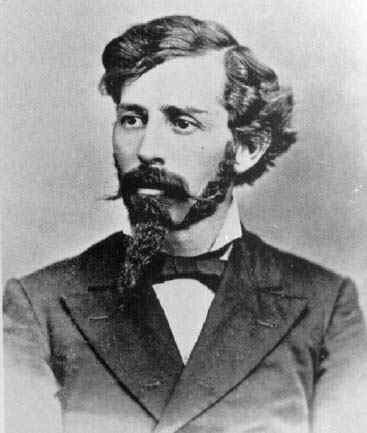
Guerrant preached throughout the mountains and settled most of his work in Breathitt County. By 1884, he was preaching in every corner of “Beautiful Breathitt” and bringing attention to the need for organized religion in the area as a way of calming the feuds and ending the bloodshed. Many of his first meetings, including the services on September 21, 1884, were held in public buildings and tents. Dr. Guerrant’s first church at Jackson grew from this meeting in which 129 confessed faith in Christ. To accommodate the growing church, Guerrant held services in the Breathitt County Courthouse and at Lees Collegiate Institute.
The Jackson Presbyterian Church held its first session on October 5, 1884, and steadily grew, which in turn created the need for a stand-alone church building. Church members Charles J. and his wife, Armina (Patrick) Little, supporters of Lees, allowed plans for a permanent church building on land he owned on Main Street. Little sold the property on January 30, 1891, to the church through their directors Wiley H. Combs, C. J. Little, and John E. Patrick for $100.00. A small lot on the back of the property was later sold back to Little and his wife in 1895.
Due to the remoteness and difficult terrain to access, the Jackson congregation did not install its first full-time minister until Charles A. Logan took the reins in 1899. Under Logan, efforts were made to build a church building, and a new brick church was opened in 1901 and dedicated to the missionary work in the area. In the fall of 1901, The Jackson Presbyterian Church reported 1,450 members in numerous satellite churches and Sunday schools.

The new brick church was named in honor of Bennett H. Young, a spiritual and financial supporter of Guerrant’s work. The Bennett Young Memorial Church of Jackson grew and continued to support Sunday schools and mission work across the area, including the McCormick Chapel in South Jackson. On May 5, 1903, the Bennett Young Presbyterian Church was the scene of the massive funeral attended by hundreds for James B. Marcum, who was murdered on the steps of the Breathitt County Courthouse during the darkest days of the feuds.
The brick structure served the community’s civic and spiritual needs until Halloween night, 1913. A fire, starting on Broadway near the Thompson Hotel, spread quickly up Broadway and Main Street, fanned by a strong wind. At first light on November 1, hundreds of soldering structures lay in ruins, including the Bennett Young Memorial Church.
For nearly two years, the rubble and ruins of the Presbyterian church sat untouched. Weeds and trees grew in the burned-out foundation. In May 1915, the last of the walls were taken down, and the local Boy Scout unit under patrol leader Charles Beuris went to work cleaning the bricks. The rubble that was not salvageable was hauled to the Frog Pond area and dumped. In exchange for their work, the Scout unit earned enough money to buy their scout uniforms.
The church elders announced their 30-day plan on May 25, 1915, that would raise $7,500. Two captains were elected at a church meeting, and William S. Jett was chosen to lead the “Red Team,” while the “Blue Team” was headed by C. L. Jones. Under the plan, the team members would compete by selling $60 full shares to the public. In exchange for their donations, subscribers received a blue or red button and an embossed certificate showing their support for the building effort. Church members also sold “bricks” for $5 each to contribute. Owing to the downturn in the local economy, the church permitted a quarterly installment plan to satisfy the pledged amount within one year.
Church members started the sale of bricks and shares on May 26 and met nightly at Lees to report the progress of the day. At seven o’clock every night for the 30-day period, the old church bell would be sounded to remind the community to pray for the success of the fundraising effort. Sales of bricks and shares was brisk to start and then quickly slowed.

Construction soon started on clearing the site and preparing the foundation to receive the cut sandstone blocks that had been chosen for the building. At 3:00 p.m. on Thursday, October 21, 1915, a large crowd of church members and townspeople gathered in the grassy lot on Main Street to witness the cornerstone laying of the third Presbyterian church in Jackson in “ideal weather”. The strains of “Onward Christian Soldiers” opened the meeting, and the crowd heard orations from Pastor Charles Groshon Gunn, Elder Charles A. Leonard, Principal R. M. Lacy of Lees Collegiate Institute, and Rev. J. H. Broom of the Baptist Church.
Rev. W. W. Peavyhouse introduced the keynote speaker, and Dr. E. O. Guerrant spoke about the changes he had seen in Jackson since his first visit in the mid-1880s. After a closing hymn, the crowd retired to the Jefferson Hotel for a brief reception for Dr. Guerrant.
Fundraising efforts continued, and Pastor Gunn traveled the state and country with a magic lantern slide show featuring images of Eastern Kentucky Missions started by Dr. Guerrant. The “Beautiful Breathitt and Lovely Lee” campaign brought much money to the effort, but the greatest campaigner for the church at Jackson soon left the effort.
For more than 30 years, Dr. E. O. Guerrant followed the winter trail of the snowbirds to warmer weather in Florida. The winter of 1915 was no different, and he wintered in Umatilla, Florida. On his way back to his home in Wilmore, Kentucky, in the Spring of 1916, he stopped at the home of his daughter, Julia Patterson, in Douglas, Georgia. On April 26, 1916, the great “Evangelical Lion of the Mountains” never awoke from his afternoon nap.




The body of the mountain reformer was brought to his home in Kentucky, and he was laid to rest with military honors at the Lexington Cemetery in a solemn ceremony attended by thousands. Honors and praise were heaped upon the memory of the “Soul Winner,” and the Jackson Church met in early October and voted unanimously to change the name of the Jackson church to the E. O. Guerrant Memorial Presbyterian Church.
Despite the hard work, the constant campaigning of the red and blue teams, and the renaming of the church, the effort fell short financially. The large brick building envisioned by the church and the Committee could not be built in the manner that had been planned with the amount of funds that had been raised. Changes were made to the plans, and a decision was made to use native-source sandstone quarried from local suppliers because it was cheaper and could be used to represent the firmness of Guerrant’s faith.
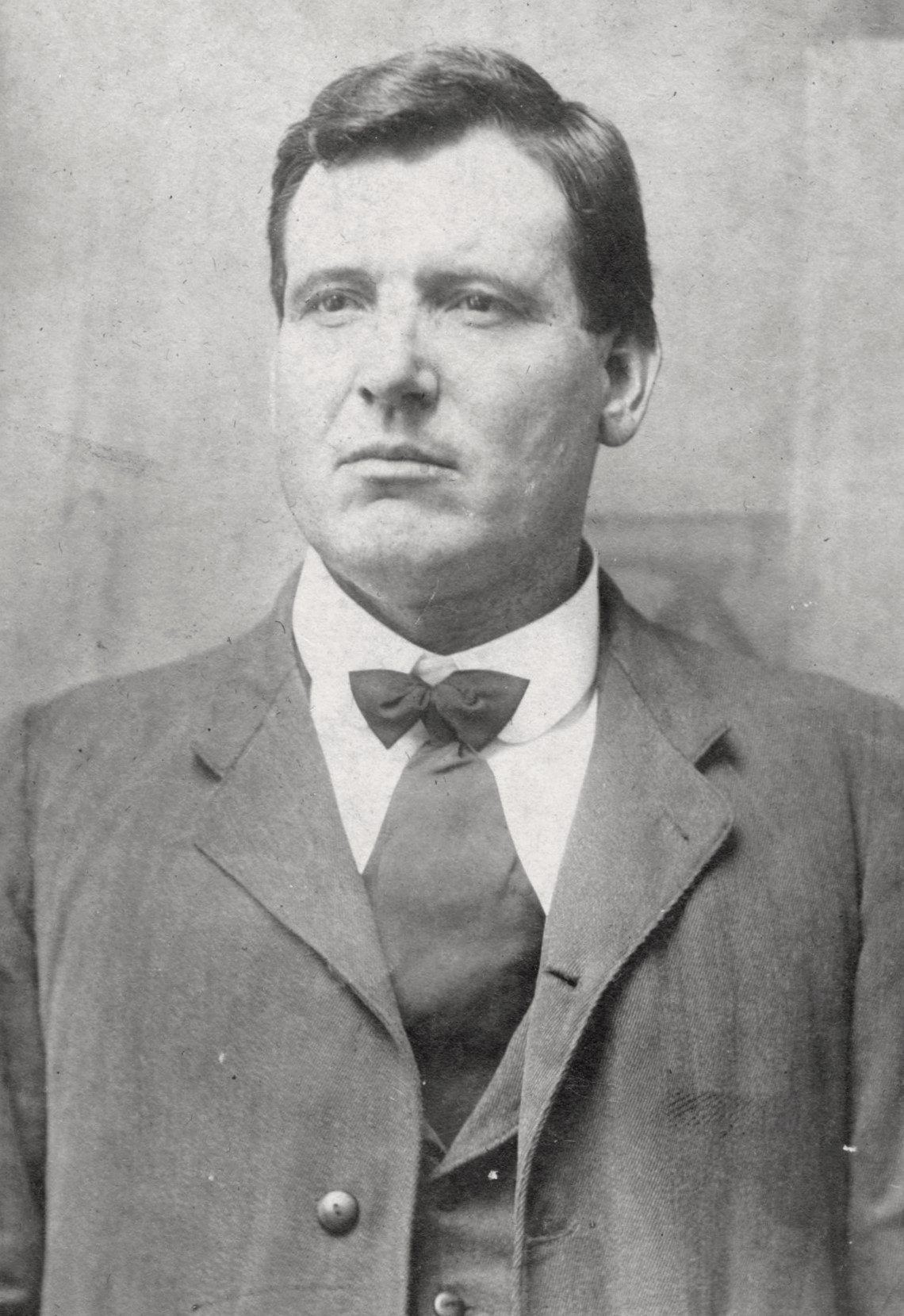
The Building Committee and the Board of Trustees met in special session on July 2, 1916, to discuss the building project shortfall. After several hours of discussion and debate, the group agreed to seek a mortgage of $2,000 on the property and a semi-finished structure to complete the building. An agreement was secured from the Louisville Trust Company, and the church agreed to repay the money at a rate of 6% interest in $250 increments until the loan was repaid. The Building Committee and Directors Grannis Bach, Hiram June Jett, W. S. Jett, C. L. Jones, J. H. Newland, and Chester Arthur Back signed on behalf of the church and pledged their own personal sureties that the money would be repaid within 5 years.
In its final form, the proposed church included an auditorium that would seat 300 and a Sunday school area in the basement that could accommodate 200. The building also contained a new pastor’s office and several smaller classrooms on the ground floor. The Elders of the church had planned the Sunday school area in the downstairs area to be a versatile space that could be rearranged to host church dinners and other local gatherings. The final estimated cost for the new structure as proposed was $9,000.

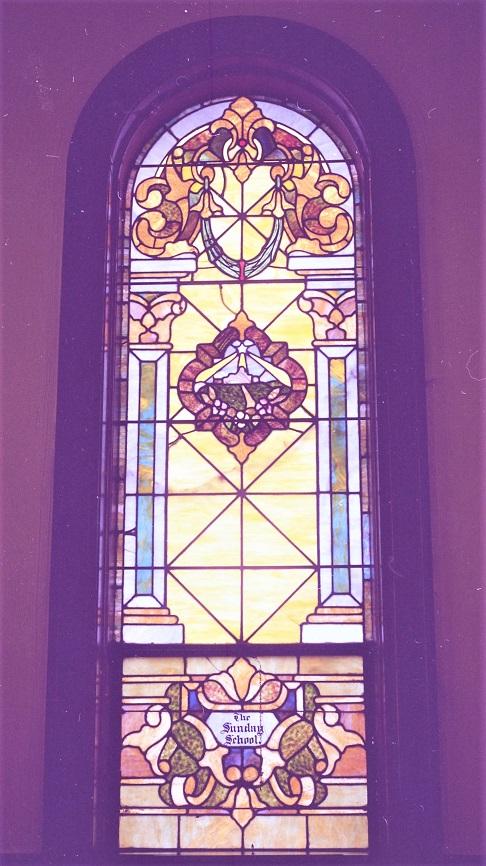
With the new cash from the finance company, construction started in earnest, with the contracts for the exterior walls of stone awarded to John W. Dean. The interior contract awarded to Farrish Back “at a fair price.” Donations for the furnishings poured in. The John Hunt Morgan’s Men Association in Lexington donated the pews, and the pulpit furniture and a large Bible were gifts in memory of Dr. Guerrant by the ladies of the Kentucky Chapter United Daughters of the Confederacy. Stained glass windows were donated by several organizations and individuals to honor religious leaders, including Guerrant, Benjamin Biggerstaff, Judge John J. C. Bach, and Rev. Charles Goshon Gunn. Money to purchase two smaller windows was raised by the local Sunday school class, while individuals, including Dr. and Mrs. M. E. Hogg, donated others.
The building went up quickly with sandstone cut by the African-American masons in the Marcum Heights quarry. The interior was “put up and plastered” with the donated lights and the stained-glass windows installed by local workmen. The building was ready, and on Sunday, May 13, 1917, it was dedicated “to the use of the Master” and to the memory of its founder, Dr. E. O. Guerrant.
Through the years, ministers and leaders like J. C. Hanley, H. L. Cockerham, S. M. Logan, Walter Maude, D. E. Renegar, William Van Zant, Gerald Wheeler, George Fletcher, David Wells, Eric Mount, Dick Harrison, Juanita Callahan, and others have continued the evangelical tradition established by Dr. E. O. Guerrant and memorialized in the stone walls of the church.
The church still stands today as a symbol of one man’s devotion to the teachings of Jesus Christ and the community’s respect and admiration for his efforts.
© 2023 Stephen D. Bowling

 Bookie on the Trail