By Stephen D. Bowling
This is the fourth installment of a series of articles that follow the development and success of the football team at Breathitt High School.
Tevis Gray arrived in Breathtit County with a head full of steam and many ideas. “I knew a little bit about football,” Gray said in a 2023 interview. “I thought, let’s see what we can do.” Gray started work to gather even more support for the football program. Since the movement to start football began, confidence that Breathitt High School would finally have a team was at an all-time high.

He became a local celebrity, although he believed that many saw him as an outsider. Gray described the tight-knit community that he found in Jackson. “What I found were true mountain people,” he said. “I’m not being derogatory, I mean, they would give you the shirt off their back, and they would do anything for you. They would help you try to do anything you wanted to try. I always felt like it was a great family community.”
“I had a job to do, and my focus was on that. I had to communicate to the community what we were trying to do and how we were trying to do it,” Gray said.
Gray hit the ground running. The new coach provided a spark to renew interest in the football program at Breathitt. All the momentum lost during the long debate about hiring a coach was swept away by his smile and ability to communicate a vision for the team. “Football’s back in the limelight, you’ll notice,” Louise Hatmaker declared. “The hiring of Coach Tevis Gray brought new life to the Football Fund Committee.”
More money
The Breathitt Football Fund Committee continued its work. Donations from previous commitments poured in, and the Committee members worked to grow the Fund. The Lion’s Club presented their check for $4,000 raised during the annual Radio Auction, which boosted the Fund to nearly $18,000.
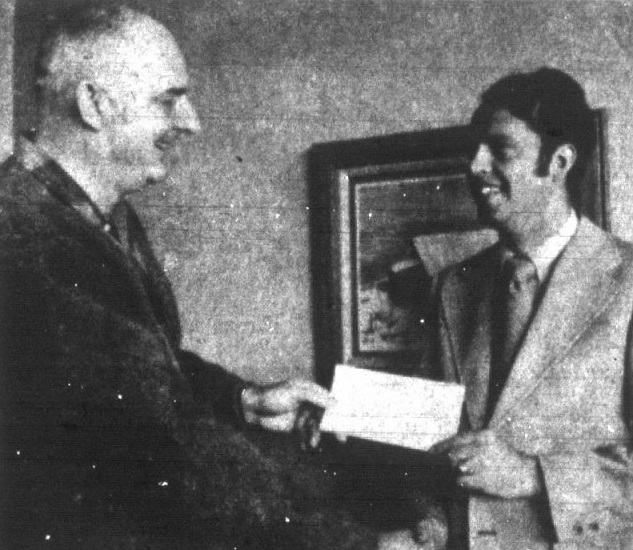
Gray made the rounds to civic groups to increase support for this team. He made presentations and answered questions at the Kiwanis Club, School Advisory Committee, the Woman’s Club, and other organizations. The Breathitt County Football Fund Committee announced in January 1973 that it would give all the funds it raised to the Breathitt County Board to spend on the football program now that a head coach had been hired.
Building the Team
“They wanted me to start working in the school system as soon as I got there,” Gray said. “The first day I was there, I went to the high school and then to the elementary schools and got started.”
Gray’s first efforts at building a team were focused on the feeder system. He worked with the physical education classes at the grade schools and went every morning to work with the 5th, 6th, 7th, and 8th grades. In the afternoon, he drove back to BHS to work with the high school, where he taught a conditioning class for Freshmen and Sophomores.

One early decision caused a great deal of controversy when it was announced. Gray told supporters and students at Breathitt that he would not allow Seniors to come out for football. Since the long-term goal was to build a team, Seniors who played in the Spring season would only “have taken the playing position spot of a learning and developing player.” Several students and their parents approached Superintendent Sebastian and Board members to complain. Sebastian simply stated that he knew nothing about coaching football and that “those decisions were left to the coach we hired.”
Gray called a meeting in late January with all underclassmen who were interested in playing. After the meeting, Bill Toler informed the Board that his first session saw about 140 BHS students express an interest, and 137 later signed up to be on the first team. Thirty-five from the junior class signed up to play without knowing if they would be allowed to play or scrimmage in the Fall of 1973 since rumors circulated that they may be excluded as the Seniors were. Gray quickly settled those fears.
“This number will fall off,” Bill Toler told the members of the School Advisory Council, who worried about purchasing equipment for that many players. “Once the hitting starts under Coach Gray’s instruction, the numbers will go down.”
Coach Gray started conditioning with more than 100 potential players coming to the work sessions. “We really started at the basics,” Gray said. “We did not really have any equipment, and you have to run in all sports, so we just started running. And we ran them and ran them.” He and his volunteer assistant coach, Jerry Johnson, put the group through football exercises and threw the few old and worn footballs they had around the Coliseum and out in the field on the river bank on nice days. “We had to teach them how to hold and throw the football,” Gray said, “and we focused on learning the game.”
“We had no idea about rules or plays,” a player on the first team later said. “We just got out there and did what he said.”
Gray did face many challenges in the community. “Breathitt County was a tremendous basketball town,” the new coach said. He said that Breathitt’s basketball coach Jack Stanford, “did a spectacular job with his kids, and they had built a program that was second to none.” Gray found great support for football as a second sport as long as it did not interfere with basketball. He later said that the most difficult challenge he faced at Breathitt was “changing the mentality and the thought process that you can play more than one sport and something besides basketball.”
“It was a good thing that I was young and extremely naive,” Gray said. “Not knowing any better, I was not distracted. I was headstrong and focused on the job at hand and wanted to build something that was better than when I arrived.”
Gray and Johnson focused on the physical preparedness of the new team. “We ran them every day, and that quickly whittled away a lot of kids because they did not understand the importance of that kind of training and that kind of work,” Gray said. “I learned a valuable lesson very early on. By the time we got into the spring and got ready to do a game, we almost did not have enough players left to field two teams.” Gray put out an “all-call” and invited anyone who had left but wanted to come back to the team and try it again to come back. He was surprised that some of the smaller kids that he “drove off in the early days turned out to be some of the toughest kids on the field.”
“I learned a good lesson as a young coach,” Gray said. “Don’t deny anybody a chance to play. Do what you have to do to find equipment or what they need to give them an opportunity to play. I learned that you don’t get rid of anybody – find a way and keep them all out.”
Equipment
In January 1973, Coach Gray asked the Football Fund Committee to make its first major purchase. Gray asked for a Universal Gym System at an estimated cost of $2,295. He described the equipment as a body-building unit, which had been thoroughly tested and found completely safe for student use. In addition to his gym system, Gray requested a blocking sled, eight hand dummies, and three tall dummies. He said he was not opposed to used equipment and described himself as a “scavenger and would make use of anything” that was donated or made.
The Board of Education approved the purchase of Gray’s Universal Gym, but many equipment needs remained. The school had only a few footballs in January. Jackson resident, Jalia Allen, was a snowbird. Each Fall, Allen traveled to Florida, where she spent her winters in the coast’s warmth and sunshine. She received her January 18, 1973 edition of The Jackson Times with the announcement of Gray’s hiring and was reminded of a promise she made.
Allen mailed a check for $20 to Louise Hatmaker with a note to buy the first new football for the team. She sent the money to fulfill a “promise of several months ago when she told Jim Hay she’d buy the first football if you ever get a coach.” Allen wrote that she did not know how much a football would cost, but if it was not enough, her $20 ought “to make a down payment on one.”
A lack of equipment remained a major issue. Louise Hatmaker stated jokingly in a January 1973 editorial, “We are going to beg, borrow or steal equipment where ever we find it.” Gray told the Football Fund Committee that he was “very anxious to secure used footballs or any equipment that was donated.” The press was on for connected Breathitt County Football Committee members to find donations for the team. Jerry F. Howell, a frequent donor and a member of the Board of Regents at Morehead State University, was already at work asking MSU President Adrian Doran for any “leftover” equipment.

Howell’s connections worked. Morehead State University donated approximately 50 sets of football pads and helmets they “found lying around.” Some old jerseys were also located and offered to get Breathitt’s program going. Superintendent Eugene Sebastian sent Board employees under the direction of R. D. Gabbard to Morehead in two trucks to pick up the donation. Twenty or so footballs also found their way onto the truck for the ride to Jackson.
One legendary piece of equipment made an early appearance in the training regiment. The metal framed contraption left an engrained mental impression and often many physical marks on the young football team. A piece of equipment called the “Man Maker” found its way to the BHS campus. The exact date it came is unknown, but the device was there by 1974. Several players remembered its welcoming hugs in 1973. The device, a spring-loaded system designed to mimic full contact by hurling a padded bar at the players, soon turned a rough group of boys into football men. “That thing would absolutely put you on the ground if you didn’t pay attention,” one early football veteran said. “You had to be ready when they squeezed that trigger. I think I may still have bruises from that thing.” Generations of future BHS football players would come to love this device as much as the first teams did.
While the team worked on understanding the game and getting stronger, Coach Gray noted that it would be about three years before Breathitt could compete in conference play. He told students that he expected to play a lot of B-Teams in the coming season during the fall of 1973 and during the first few years to help develop the team. He went to work on scheduling games for the Fall.
The Spring Team
By the late winter, Gray decided that his squad was ready for its first full-contact scrimmage. He scheduled a Blue-White game for May 18, 1973. The event was announced as the official public debut of football at Breathitt High School. A new county-wide committee was formed and helped plan the event.
Restricted at its creation to only football, the Breathitt County Football Fund Committee could not promote other sports or events. A new organization was formed in April 1973, called the Breathitt County Athletic Boosters Club, to aid the county schools’ football and other athletic efforts. Former BHS basketball standout Doug Allen was selected as the first president of the new boosters organization. He called a meeting for May 3 at the Breathitt County Courthouse.
Gray told many of those who attended the meeting that he was “overwhelmed” by the quality of talent that he found in Breathitt County but that they still needed support. During the meeting, the Football Fund Committee expressed their desire to “step into the background” and “let whatever boosters or organization is formed take over the support chores.” Allen and the new Boosters group charged ahead with plans for the May 18 inter-squad scrimmage.

The First Game
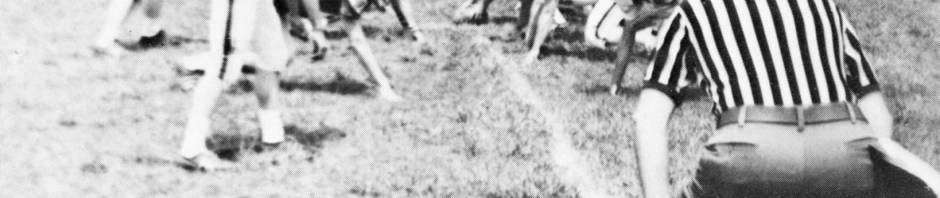
As the first game approached, the University of Kentucky loaned Gray and the Breathitt Bobcat team enough uniforms with numbers on them to play their first game. The Lions Club agreed to set up a concession stand and donate the proceeds to the team. The school system’s maintenance team used donated lumber from local sawmills to build several small wooden stands for some of the anticipated crowd at the first game. Admission was set at fifty cents for students and one dollar for each adult. Mostly straight lines were painted across the large field on the river bank behind Breathitt High. Everything was set for Breathitt’s first test on the gridiron.
The Boosters and Coach Gray set the time for the first game for 12:30 p.m. on May 18. A large crowd gathered long before they started selling tickets, and the concession stand had to go purchase additional supplies, and more RC Cola was delivered to the field.
The turnout far exceeded any projection. The exact number of how many sat in the blazing sun to see the first football game is unknown since many had “just walked across the field” to the game and did not pay.
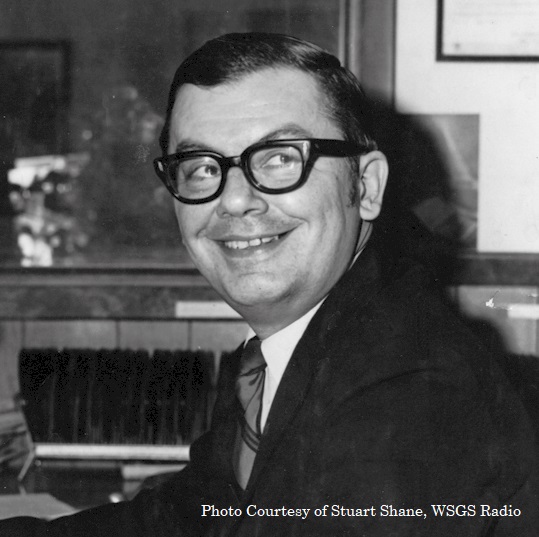
Guest announcer, Jay Lasslo, on loan from WKIC in Hazard, provided play by play for the game live on WEKG for those who could not attend in person.

The team had been divided into the Blue and the White squads. The Blue Team, coached by Tevis Gray, included: Mark Wireman, Greg Ellis, Mike Riley, Dennis Griffith, Daniel Haddix, Robert Privett, Terry Tackett, Jim Back, Ronnie Torok, Eddie Hardin, William Hann, Donnie Haddix, Michael Stamper, Charles Noble, Wayne Roberts, Raleigh Henson, Jeff Smith, Charles Keith, Jesse Tackett, Jeff Strong, Perry Lovely, and Harold Roberts.
Assistant Coach Jerry Johnson coached the White Team staffed by Granville Turner, Mike Neace, David Henry, Wallace Howard, John Winburn, Tom Strong, Wayne Watts, Gary Shouse, Charles Neace, John Prater, Rick Brown, Doug Johnson, Tommy Oaks, Francis Gross, Jeff Noble, Kenneth Bush, Robert Shouse, Kenneth Harvey, Glenn Spicer, Donnie Combs, and Adam Barnett.

The first game was a defensive struggle with no kick-offs or extra point kicks during the scrimmage. The first points scored in Breathitt High School football history came from a safety in the first quarter. The White Team stopped a Blue Team drive and forced a punt on fourth down. Blue’s center Greg Elkins hiked the ball well over the head of the punter, Mike Riley. Riley scrambled to recover the ball but was swarmed in the endzone by several White Team players. Tom Strong was credited with the tackle and the first points in Breathitt football history.

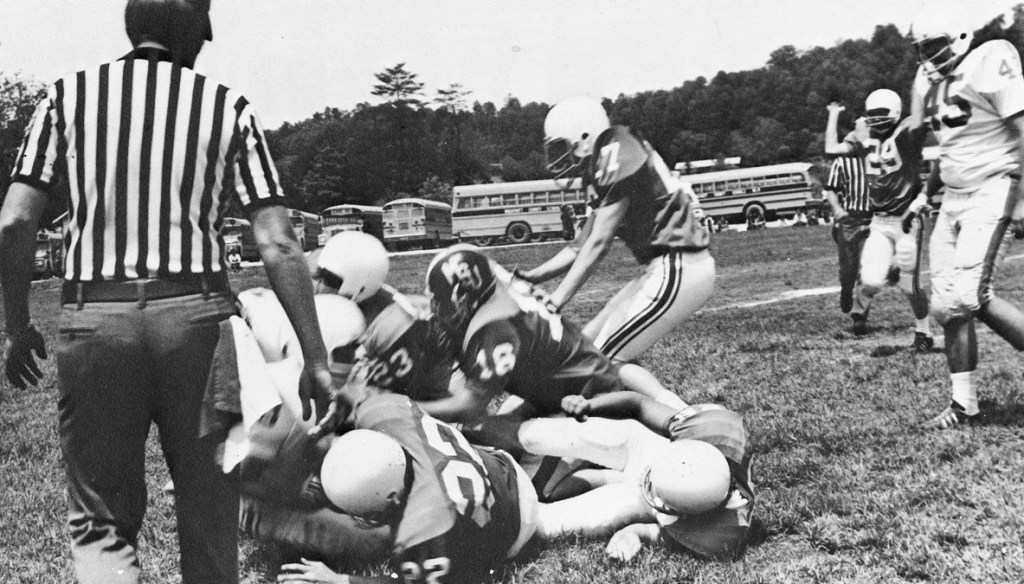

More records were added to the books on the hot afternoon of May 18. Both teams were scoreless in the second quarter, and the White team took their 2-0 lead into halftime. Breathitt football recorded its first touchdown early in the third quarter. On a 3rd down-play well inside the red zone, White team quarterback Gil Turner handed the ball off to half-back Charles Neace who ran the ball into the endzone for a 5-yard score. The White Team successfully completed the mandatory two-point conversion (since they did not have kickers yet) as quarterback Gil Turner handed the ball to Jeff Strong, who rounded the left end of the defensive line for the extra 2 points. Both defenses held in the fourth quarter. Coach Gray’s Blue team lost by a score of 10-0 to Assistant Coach Jerry Johnson’s White Team.
After years of effort by many committees and individuals, Breathitt High School finally had a football team. Many questions remained, and many wondered if the early support and success could be sustained. The team, wearing borrowed equipment, playing on a makeshift field, without a complete understanding of all the rules, under a rookie 23-year-old kid for a coach, somehow found a way to play their first game with community support.
“I am very happy with the results,” Gray said after the game. “We have a lot of work to do, but we are on the way.” The first team defeated the odds and set the course with sheer determination for what would become one of the most storied programs in Eastern Kentucky.
© 2023 Stephen D. Bowling

 Bookie on the Trail