By Stephen D. Bowling
The first significant warning sign came in January 1949. The Louisville & Nashville Railroad announced a reduction in the number of passenger trains that ran between Lexington and McRoberts. The Kentucky Railroad Commission approved the reduction at its regular meeting on January 12th. In the following years, the number of passengers continued to drop. Sadly, the L&N made its last passenger run through Jackson on June 14, 1956.
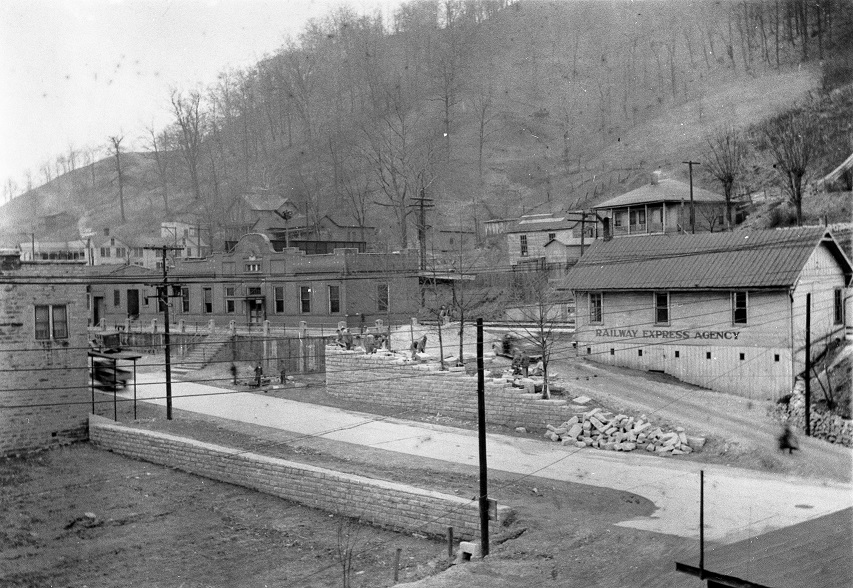
The United States Postal Service relied on the Lexington & Eastern Railroad to haul mail more efficiently into the mountains in 1891 when the railroad steamed into Jackson. The L&E was sold to the Louisville & Nashville Railroad in 1911, and the passenger and mail service was extended to Hazard in June 1912.

For more than forty-four years, passengers and the United States Mail traveled on a train pulling two passenger cars, some freight, a mail car, and a caboose. The line was eventually extended to McRoberts in Letcher County and hauled hundreds of passengers daily. In the 1920 and 1930s, interest in improving the road system in the mountain took top priority. State and federal government investments funded improvements to many mountain roads. Areas of the Appalachian foothills could be accessed more efficiently and with less expense than building and maintaining railways.
The L&N Railroad sought permission in 1949 from the Kentucky Railroad Commission to reduce the number of trains from Lexington to Hazard due to a decrease in ridership. A loud and bitter protest followed from local officials in every town along the line. After hearing testimony from both sides and reviewing the “volumes of evidence” presented by the railroad, the Commission ruled that the L&N was losing money on each run and permitted the reduction starting on March 1, 1949. After 44 years of running four trains a day, the L&N ran one train from McRoberts at 8:20 a.m. each day, and it left Lexington on a return trip at 4:15 p.m.

The state continued to build new roads, and the opening of sections of the Kentucky Virginia Highway (now Highway 15) pulled more train passengers away as roadways improved and individual car ownership increased. Rumors of the end of service swirled as empty Pullman cars were pulled from Hazard to Lexington. In late 1955, the L&N Railroad filed paperwork with the Kentucky Railroad Commission to stop Trains 3 and 4 and end all passenger service to the mountain due to a lack of usage. The Commission scheduled a rare field hearing at Hazard to hear the evidence from the railroad and the railway users after businessmen from Jackson and Hazard contacted Governor Lawrence Wetherby.

The meeting, held on Thursday, February 2, 1956, at Hazard, was packed. Many who attended the session arrived the day before because the train did not run early enough to make the 10:00 a.m. meeting. Railroad Commission Chairman Frank L. McCarthy opened the meeting and heard testimony from residents of Leslie, Perry, and Breathitt County who attended the meeting. The loudest cries to keep the passenger service came from the Hazard City Commission, who argued that the end of the service would end the commercial district in Hazard. The businessmen of Hazard argued that the freight and coal hauled by the passenger trains amounted to more than 23 million in profit for the L&N and “more than covered the expense lost by a lack of passengers.” They argued the L&N owed the people of the mountain “a moral obligation” in exchange for the profit they collected from the area.
Representatives from the Louisville & Nashville Railroad told the Railroad Commission that it has been “operation at a deficit on its passenger service to Hazard since 1936.” “We only broke even a few years during the war,” a representative stated. The railroad provided information to the Commission that indicated a loss of $82,850 from March 1, 1954, through February 28, 1955. “That is not sustainable at any level,” an attorney for the railway said.
Chairman McCarthy gaveled the meeting closed and gathered the evidence submitted. The Commission did not announce any ruling or make an official statement. He told the crowd they would consider the testimony and financial information. The Commission boarded the train the next day and rode back to Lexington. On April 12, 1956, Chairman McCarthy announced that the “petition for removal” to end the passenger service had been denied by the Commission and that Trains 3 and 4 would continue to operate as a service to the people of the mountains.
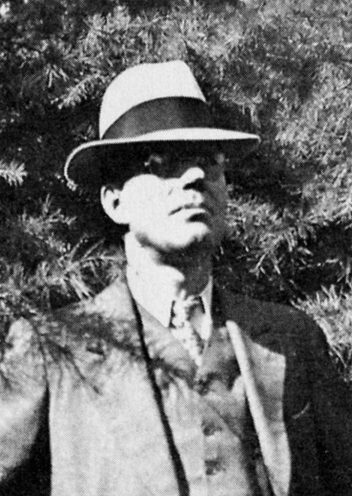
The L&N announced that afternoon that they would end the service without the Commission’s permission on May 12, 1956. “this is to notify you that the Louisville & Nashville Railroad Co. will not comply,” the notification for the railroad stated. The railroad’s attorneys described the Commission’s refusal to end the service as “unlawful,” “arbitrary,” and unlawful under state law. The railroad cited state law that required “an individual passenger train must be discontinued on request if a railroad proves the train is operating at a loss, even though the road’s overall operation is profitable.”
McCarthy and the Commission announced later that evening that it planned to file suit to enforce its ruling and to keep the train running. The Commission had recently lost a court action against the Illinois-Central Railroad when it ignored the Commission’s order to continue running trains 103 and 104 between Louisville and Fulton, Kentucky. McCarthy and the Commission filed suit against the L&N in Franklin County Circuit Court.

On May 11, 1956, Circuit Judge William B. Ardery ruled after a hearing in Franklin Circuit Court that the Railroad Commission did not have the authority to force the L&N Railroad to run a train that was not profitable. He ordered that the L&N Could end the passenger traffic “not earlier than June 15.” The railroad announced it would comply with the court order and not eliminate the route on May 12 but would run until June 15 as directed. McCarthy told reporters that the Commission “would not appeal the decision of Judge Ardery.”
Thirty passengers boarded the Pullman cars at Lexington on June 14 for one final ride into the mountains. Engine 607 pulled out of the Lexington Station at 12:15 p.m., headed for Hazard and one last run south. The train pulled its carloads of “railroad men” and a few “random passengers” who rode one more trip for “old time’s sake.” The ride was, as The Lexington Herald described it, “a sentimental journey” along the old line first started by the Lexington & Eastern and later improved and expanded by the Louisville & Nashville.
The last run started at the Hazard Deport at 6:55 a.m. on June 15, 1956. Engineer John Palmer “laid on the whistle,” and the diesel engines of Enginer 607 roared to life. Through Hazard, Barwick, Copeland, Haddix, Jackson, and points beyond, crowds stood beside the tracks to see the last passenger train roll toward the Bluegrass with “nearly every platform full of train watchers.”
L&N Agent J. M. Johnson told a reporter from The Lexington Herald that “people just don’t ride the train anymore.” Johnston noted that hauling the United States Mail was the primary railroad use since new mountain roadways had been constructed. The US Mail instituted a Star Route system to deliver rural mail by truck; only a tiny percentage of eastern Kentucky’s mail came up on the train. In early 1956, William Cecil, Postmaster of Lexington, Kentucky, announced that the post office would be remodeled and expanded to handle a heavier mail load connected to discontinuing the rail mail service to the mountains.
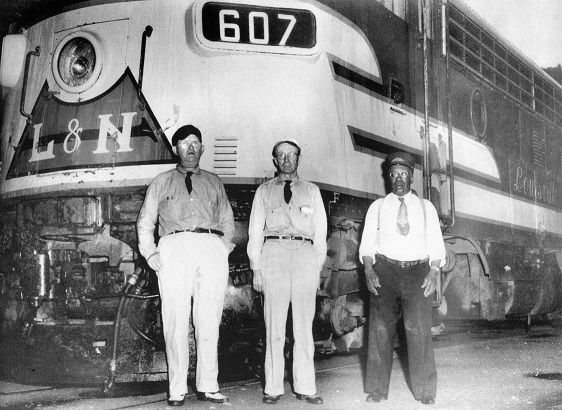
Train Number 4 pulled into the station at Lexington at 11:59 a.m. The passenger line that once brought hundreds of thousands to Jackson, including a First Lady of the United States, would never make another run. The East Kentucky Division now belonged exclusively to “King Coal.”
The L&N continued to haul freight into and coal out of the area. Through the years, it was acquired by other railway companies, including the Seaboard Coast Line Railroad and eventually the CSX Corporation, by merger.
Today the tracks in Jackson are silent. An occasional railroad vehicle can be seen doing track maintenance, but a train is a rare site. The sounds of four passenger trains and numerous coal trains rolling up and down the tracks are long gone. None are probably alive who remember a ride on the L&E passenger train, but many have fond memories of a ride on the L&N, which ran its last trip in 1956.
© 2023 Stephen D. Bowling

 Bookie on the Trail